
What Is Affiliate Marketing? A Beginner's Guide for Americans (2026)

Introduction
If you’ve spent any time researching ways to build an online business, you’ve probably come across the term affiliate marketing.
Some people describe it as one of the most accessible ways to build income online.
Others make it sound like a fast and easy path to financial success.
The reality is much more practical.
Affiliate marketing is a legitimate marketing model used by companies around the world to reach new customers. At the same time, it creates opportunities for bloggers, content creators, website owners, and online publishers to earn commissions by recommending products and services they genuinely find useful.
In 2026, affiliate marketing remains one of the most widely used online business models in the United States. Thousands of businesses—from software companies and online learning platforms to retailers and subscription services—use affiliate programs to expand their reach and attract new customers.
One reason affiliate marketing remains attractive to beginners is that you don’t need to create your own products, manage inventory, process payments, or provide customer support.
Instead, your primary role is helping people discover solutions to their problems.
That sounds simple, but successful affiliate marketing involves much more than posting links online.
It requires credibility, audience understanding, useful content, and consistent effort.
If you’re completely new to the concept, don’t worry.
This beginner-friendly guide explains what affiliate marketing is, how it works, why companies use it, and how beginners in the United States can get started in 2026.
What Is Affiliate Marketing?
Affiliate marketing is a performance-based marketing model where businesses reward individuals or publishers for referring customers.
In simple terms, you recommend a product or service to your audience using a unique tracking link.
If someone clicks that link and completes a qualifying action—such as making a purchase or signing up for a service—you may earn a commission.
A Simple Example
Imagine you run a blog about productivity tools.
You publish an article reviewing a project management software platform.
Inside the article, you include your affiliate link.
A reader clicks the link, purchases the software, and the company tracks that referral.
Because you referred the customer, you earn a commission.
The customer does not pay extra.
The company gains a new customer.
You earn compensation for the referral.
This arrangement benefits everyone involved.
How Affiliate Marketing Works
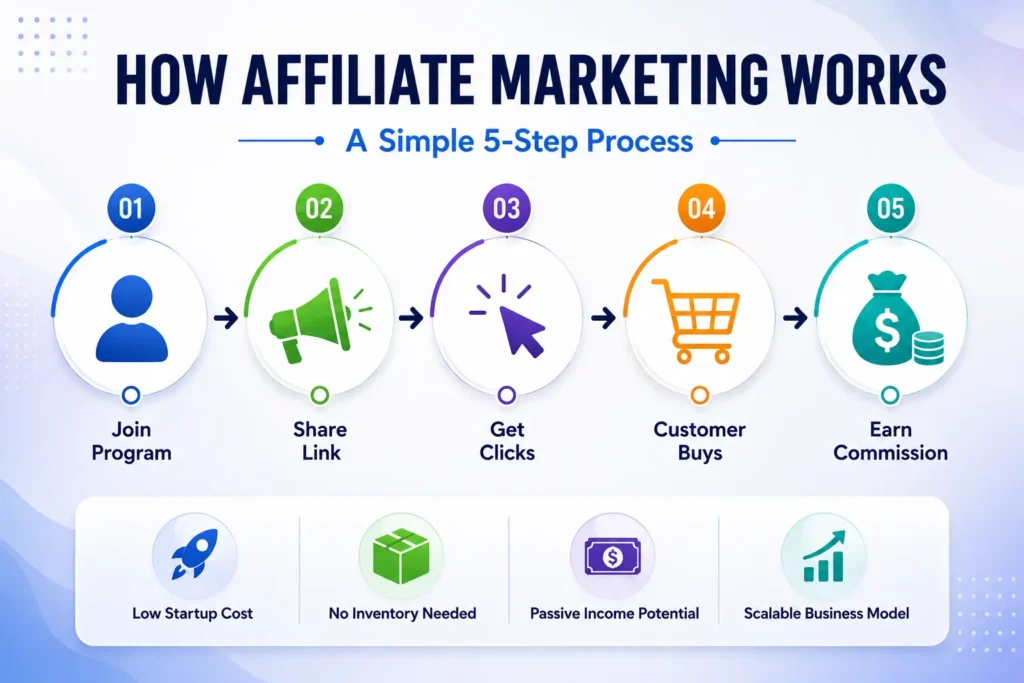
Although affiliate marketing can seem complicated at first, the process is fairly straightforward.
Step 1: Join an Affiliate Program
First, you join an affiliate program offered by a company.
After approval, you’ll receive access to tracking links and reporting tools.
Step 2: Create Helpful Content
Next, you create content related to your niche.
This may include:
- Blog posts
- Product reviews
- Tutorials
- Comparison articles
- Resource pages
- Email newsletters
- Videos
The goal is to help people make informed decisions.
Step 3: Add Affiliate Links
Within your content, you place affiliate links where they make sense naturally.
Step 4: Visitors Click Your Link
Readers who find your content may click those links to learn more.
Step 5: A Qualifying Action Happens
Depending on the affiliate program, this may include:
- Purchasing a product
- Starting a free trial
- Creating an account
- Submitting a registration form
Step 6: Earn a Commission
When the action meets program requirements, you receive a commission.
The tracking process happens automatically.
Why Companies Use Affiliate Marketing
Many beginners wonder why companies are willing to pay commissions.
The answer is simple.
Affiliate marketing helps businesses acquire customers efficiently.
Instead of spending advertising money upfront, businesses often pay commissions only when results occur.
This lowers risk while expanding marketing reach.
Affiliate marketing helps businesses:
- Reach new audiences
- Increase brand awareness
- Generate sales
- Expand marketing efforts
- Build relationships with publishers and creators
For many brands, affiliate marketing has become a major component of their customer acquisition strategy.
Why Affiliate Marketing Is Popular in the United States

Several factors continue driving affiliate marketing growth across America.
Growth of Online Shopping
Consumers increasingly research products online before making purchasing decisions.
This creates opportunities for publishers who provide useful information.
Expansion of Digital Content
Blogs, YouTube channels, newsletters, podcasts, and niche websites continue growing.
Each platform creates opportunities to recommend relevant products naturally.
Flexible Business Model
Many people begin affiliate marketing while working full-time jobs, attending school, or managing family responsibilities.
Low Startup Costs
Compared to many traditional businesses, affiliate marketing often requires relatively little upfront investment.
Common Types of Affiliate Marketing
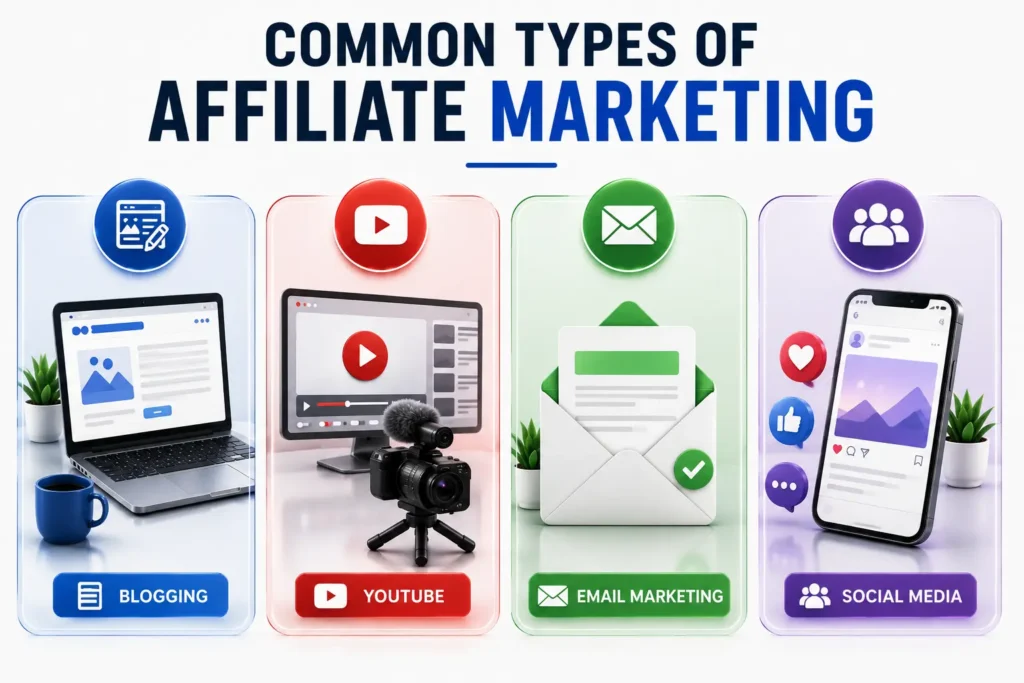
Blogging
Blogging remains one of the most effective affiliate marketing strategies.
Popular content includes:
- Product reviews
- Buying guides
- Tutorials
- Comparison articles
Many successful affiliate marketers build their businesses around blogs.
If you’re interested in creating your own website, rea How to Start a Blog in the USA (2026).
YouTube
Video creators often include affiliate links in video descriptions.
Popular video formats include:
- Reviews
- Product demonstrations
- Tutorials
- Comparisons
Email Marketing
Email newsletters allow creators to build stronger relationships with subscribers.
Many affiliate marketers use email to share recommendations and educational resources.
Social Media
Social media can help increase visibility, although relying entirely on social platforms may be risky because algorithms frequently change.
Niche Websites
Many successful affiliate marketers focus on highly specific topics such as:
- Personal finance
- Software tools
- Photography equipment
- Productivity apps
- Home office setups
Focused websites often attract highly targeted audiences.
How Beginners Can Start Affiliate Marketing
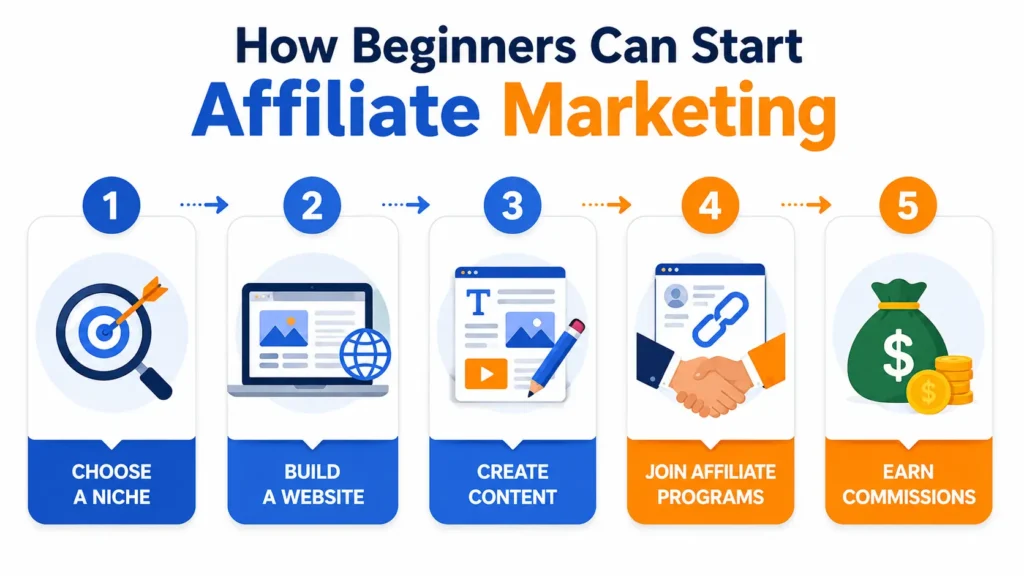
One of the biggest misconceptions about affiliate marketing is that you need advanced technical skills.
In reality, many successful affiliate marketers started with little experience.
Step 1: Choose a Niche
A niche is the topic you’ll focus on.
Examples include:
- Personal finance
- Technology
- Education
- Fitness
- Digital marketing
- Productivity
Choose a niche you genuinely enjoy learning about.
Many beginners first develop online skills through freelancing before moving into affiliate marketing.
If you’re interested in building digital skills, read How to Start Freelancing in the USA (2026).
Step 2: Build a Website
Most affiliate marketers eventually create websites.
A website provides:
- Content ownership
- Greater control
- Long-term growth opportunities
- Search engine traffic potential
A blog remains one of the strongest foundations for affiliate marketing.
If you’re new to website creation, our How to Start a Blog in the USA (2026) guide walks you through the entire process step by step.
Step 3: Create Informative Content
Content is the engine that powers affiliate marketing.
Focus on:
- How-to guides
- Product reviews
- Comparison articles
- Tutorials
- Educational resources
Useful content builds audience confidence.
Audience confidence leads to recommendations.
Recommendations create affiliate opportunities.
Step 4: Join Affiliate Programs
Once you’ve started publishing content, you can apply to affiliate programs that match your niche.
Choose products and services that genuinely fit your audience’s needs.
Many beginners make the mistake of focusing only on commission rates.
In reality, relevance matters far more than commission size.
A highly relevant recommendation often performs better than a high-paying offer that doesn’t fit your audience.
The best affiliate partnerships are built around solving problems and helping readers make informed decisions.
Step 5: Add Affiliate Links Naturally
Affiliate links should support your content rather than dominate it.
Avoid placing affiliate links where they feel forced or unnecessary.
Instead, recommend products only when they genuinely help the reader.
Step 6: Focus on Building Credibility
Credibility is one of the most valuable assets in affiliate marketing.
People are far more likely to follow recommendations from sources they view as reliable and knowledgeable.
Always prioritize:
- Honesty
- Accuracy
- Transparency
- User experience
- Helpful recommendations
Your reputation takes time to build but can become a major competitive advantage.
Affiliate Disclosure and Transparency
If you’re targeting a U.S. audience, transparency is extremely important.
In the United States, affiliate marketers are generally expected to disclose affiliate relationships clearly. If you recommend products and earn commissions from qualifying purchases, readers should understand that relationship.
A simple disclosure helps maintain transparency and supports ethical marketing practices.
Example Disclosure
This article may contain affiliate links. If you purchase through these links, we may earn a commission at no additional cost to you.
Clear disclosures help readers understand your recommendations while strengthening your professional reputation.
Transparency supports both user experience and long-term audience confidence.
Best Affiliate Marketing Niches for Beginners
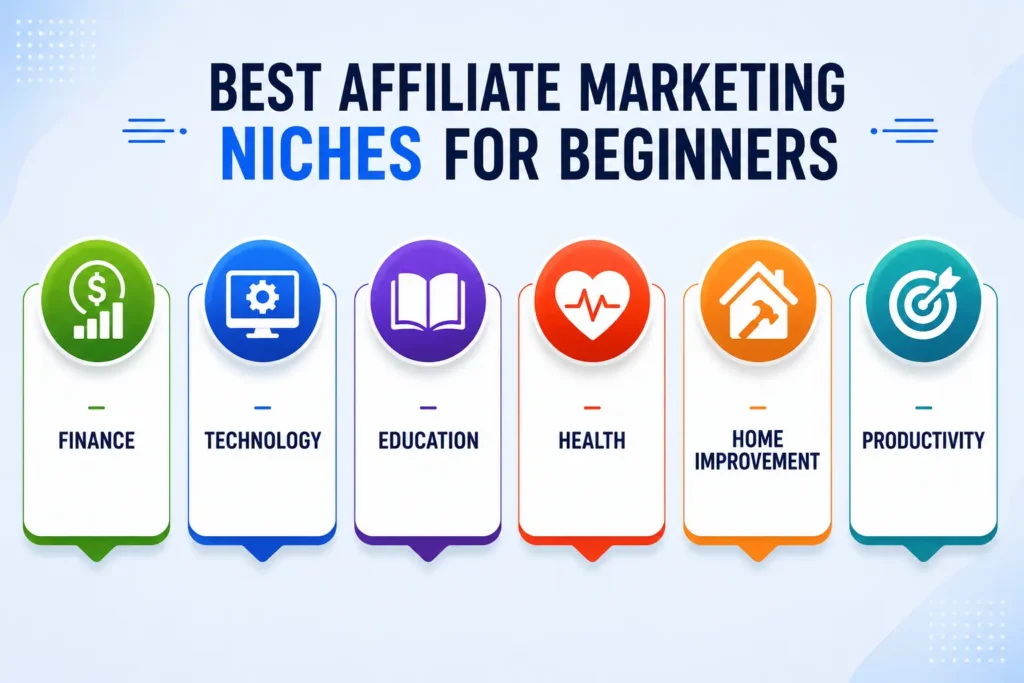
Although many niches can work successfully, some remain particularly beginner-friendly.
Personal Finance
Personal finance remains one of the most popular affiliate marketing niches in the United States.
Popular topics include:
- Budgeting
- Saving money
- Credit education
- Financial tools
- Money management
Consumers actively search for financial information, making this a strong long-term niche.
Technology
Technology remains one of the largest affiliate categories.
Examples include:
- Software
- Web hosting
- Productivity tools
- Business applications
- Online services
Technology companies frequently offer affiliate programs because digital products are easy to promote through educational content.
Education
Online learning continues growing rapidly.
Affiliate opportunities often include:
- Online courses
- Certification programs
- Learning platforms
- Professional training
Many creators build successful websites around educational content and career development.
Health and Wellness
Health-related topics continue attracting strong interest.
Examples include:
- Fitness
- Nutrition
- Wellness resources
- Healthy habits
When creating content in this niche, focus on accuracy and responsible recommendations.
Home Improvement
Home-related content remains popular among American audiences.
Topics include:
- DIY projects
- Home organization
- Tools
- Home office equipment
Many home-related products have affiliate opportunities attached to them.
Productivity
People constantly search for ways to work more efficiently.
Popular topics include:
- Productivity software
- Time management
- Project management
- Work-from-home tools
This niche works especially well alongside blogging and online business content.
Affiliate Marketing Tools for Beginners
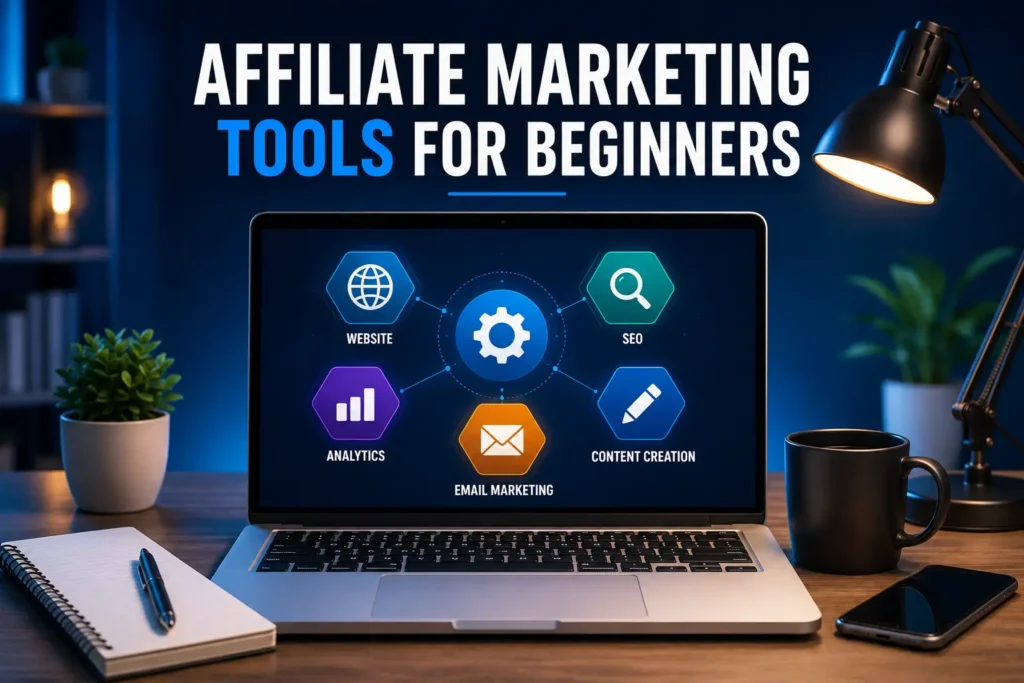
One of the biggest advantages of affiliate marketing is that you don’t need expensive software to get started.
Many successful affiliate marketers begin with simple tools and gradually expand as their businesses grow.
Website and Blogging Tools
Your website often serves as the foundation of your affiliate business.
Focus on:
- Fast loading speed
- Mobile-friendly design
- Easy navigation
- Professional appearance
- Valuable information
Your website doesn’t need to be perfect.
What matters most is consistently publishing helpful and informative content.
If you haven’t created a website yet, our How to Start a Blog in the USA (2026) guide can help you build a strong foundation.
Keyword Research Tools
Keyword research helps you understand what people are actively searching for online.
Instead of guessing what topics to write about, you can create content based on real search demand.
Keyword research helps identify:
- Questions people ask
- Product-related searches
- Comparison keywords
- Buying guides
- Educational topics
Understanding search intent can significantly improve your content strategy.
Analytics Tools
Analytics tools help you understand how visitors interact with your website.
They provide insights such as:
- Traffic sources
- User behavior
- Popular pages
- Audience growth
- Content performance
Data helps you make smarter decisions over time.
Email Marketing Tools
Many successful affiliate marketers eventually build email lists.
Benefits include:
- Building stronger audience relationships
- Increasing repeat visitors
- Growing subscriber loyalty
- Sharing educational resources
Unlike social media platforms, an email list is an asset you control.
For this reason, many marketers view email marketing as a valuable long-term strategy.
Affiliate Marketing Trends in 2026
Affiliate marketing continues evolving as technology, search engines, and consumer behavior change.
Understanding current trends can help beginners make smarter decisions.
AI-Assisted Content Creation
Artificial intelligence tools are now widely used by content creators.
Many marketers use AI for:
- Brainstorming
- Research assistance
- Content organization
- Outline creation
However, human expertise, personal experience, and unique insights remain essential.
Readers still value authentic perspectives and real-world knowledge.
People-First Content Matters More Than Ever
Search engines increasingly prioritize content created for people rather than algorithms.
Instead of publishing large volumes of low-quality content, successful websites often focus on creating fewer but more valuable resources.
Comprehensive and informative content usually performs better over the long term.
Video Content Continues Growing
Video remains one of the fastest-growing forms of online content.
Many affiliate marketers combine blogging with video content.
Videos can help:
- Demonstrate products
- Improve engagement
- Build credibility
- Reach new audiences
As consumer preferences continue evolving, video content will likely remain an important marketing channel.
Building Industry Credibility Is Essential
Modern consumers have access to unlimited information.
Because of this, credibility and trust have become increasingly important.
People are more likely to follow recommendations from sources they view as knowledgeable and dependable.
Successful affiliate marketers focus on:
- Expertise
- Transparency
- Consistency
- Accuracy
- User value
Industry credibility often becomes one of the strongest long-term advantages in affiliate marketing.
A Simple Affiliate Marketing Roadmap for Beginners
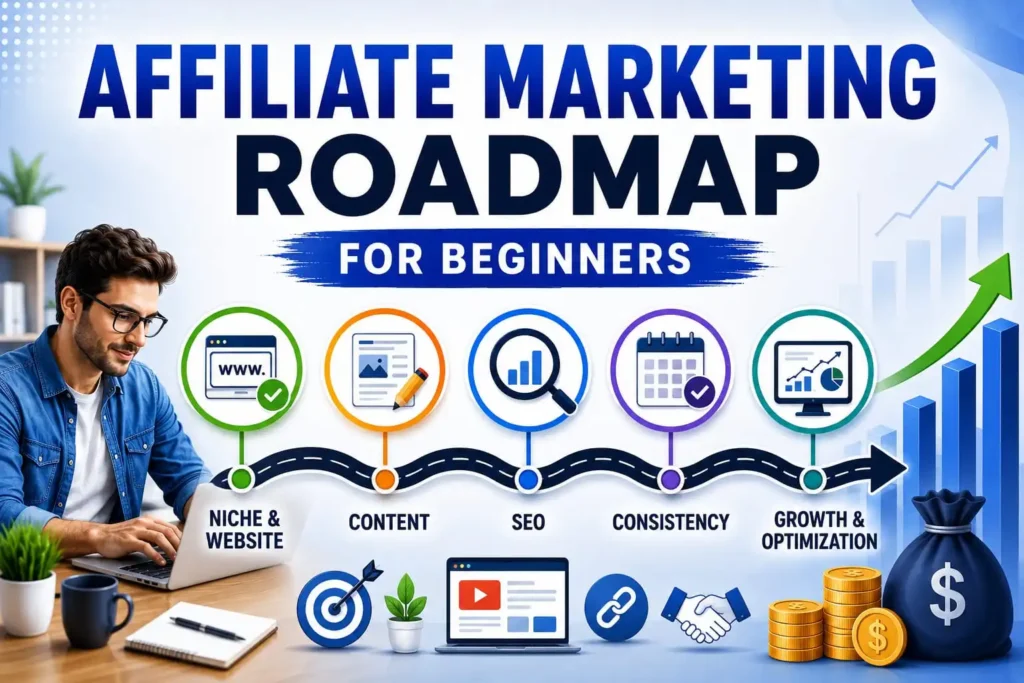
Many beginners delay starting because they feel overwhelmed.
The truth is that affiliate marketing doesn’t require perfection.
It requires consistent progress.
Month 1: Choose a Niche and Build Your Website
Start by selecting a niche that interests you and offers long-term content opportunities.
Then build your website and learn the basics of content publishing.
Don’t spend months trying to perfect everything.
The goal is to get started.
Month 2: Publish Foundational Content
Create educational content that helps your audience solve problems.
Examples include:
- Beginner guides
- Tutorials
- Resource pages
- Educational articles
At this stage, prioritize value over monetization.
Focus on becoming a useful resource within your niche.
Month 3: Learn Basic SEO
SEO can help people discover your content through search engines.
Learn:
- Keyword research
- On-page SEO
- Internal linking
- User experience basics
SEO is a long-term skill that can benefit your website for years.
Months 4–6: Build Consistency
Focus on improving:
- Writing skills
- Research abilities
- Content quality
- Audience understanding
Consistency often matters more than perfection.
Publishing regularly helps search engines and readers recognize your website as an active resource.
Months 6–12: Optimize and Expand
Review your progress and identify:
- Your most popular content
- Traffic sources
- Audience interests
- Content opportunities
Update older articles, improve internal linking, and continue strengthening your niche expertise.
Affiliate marketing is often a marathon rather than a sprint.
The work you do today can continue generating traffic and opportunities for years.
Why Many Affiliate Marketers Fail
While affiliate marketing offers real opportunities, not everyone succeeds.
Understanding common mistakes can help you avoid unnecessary setbacks and build a stronger foundation.
Quitting Too Early
One of the most common reasons beginners fail is unrealistic expectations.
Many people expect traffic, commissions, and results within a few weeks.
When those results don’t appear immediately, they lose motivation and stop creating content.
The reality is that affiliate marketing is often a long-term business model.
Many successful affiliate marketers spend months building content, improving their websites, and learning SEO before seeing meaningful results.
Patience is often one of the most valuable skills you can develop.
Focusing Only on Money
It’s natural to think about earnings.
However, people who focus exclusively on commissions often struggle.
Successful affiliate marketers usually focus first on helping their audience solve problems.
When readers consistently find value in your content, monetization opportunities tend to follow naturally.
Instead of asking:
“How can I make money from this visitor?”
Ask:
“How can I help this visitor solve a problem?”
That mindset often leads to stronger long-term results.
Publishing Low-Quality Content
Content quality matters.
Readers prefer content that is:
- Helpful
- Accurate
- Detailed
- Well-structured
- Easy to understand
Thin articles created solely to promote affiliate products rarely perform well over time.
Instead, focus on creating practical resources that genuinely help people make informed decisions.
Ignoring Audience Needs
Your audience should always come first.
Ask yourself:
- What problems are they trying to solve?
- What questions are they asking?
- What information would be most useful?
- How can I simplify complex topics?
The more value you provide, the stronger your relationship with your audience becomes.
Chasing Every New Trend
Many beginners constantly jump between niches, platforms, and business models.
One month they’re building a technology blog.
The next month they’re creating a fitness website.
Then they switch to cryptocurrency.
This lack of focus often slows progress.
Successful affiliate marketers usually build a strong reputation within a specific niche over time.
Consistency creates momentum.
Can Affiliate Marketing Become a Full-Time Business?
Yes.
Affiliate marketing can eventually become a full-time business for some people.
However, it’s important to maintain realistic expectations.
Building a sustainable affiliate business typically requires:
- Consistent content creation
- Search engine optimization
- Audience growth
- Strong user experience
- Ongoing learning
- Long-term commitment
Most successful affiliate marketers spend months or years building their platforms before generating significant income.
Think of affiliate marketing as building a digital asset.
The content you create today can continue attracting visitors and generating opportunities long into the future.
Combining Affiliate Marketing With Other Online Income Methods
Many successful online entrepreneurs don’t rely on a single income source.
Instead, they combine multiple digital business models.
For example:
- Blogging
- Freelancing
- Affiliate marketing
- Digital products
- Consulting
- Online education
Affiliate marketing works particularly well alongside blogging and freelancing because the skills often complement each other.
If you’re exploring different online income opportunities, these guides may help:
Together, these resources can help you build a stronger foundation in the digital economy.
Building a Long-Term Affiliate Marketing Strategy
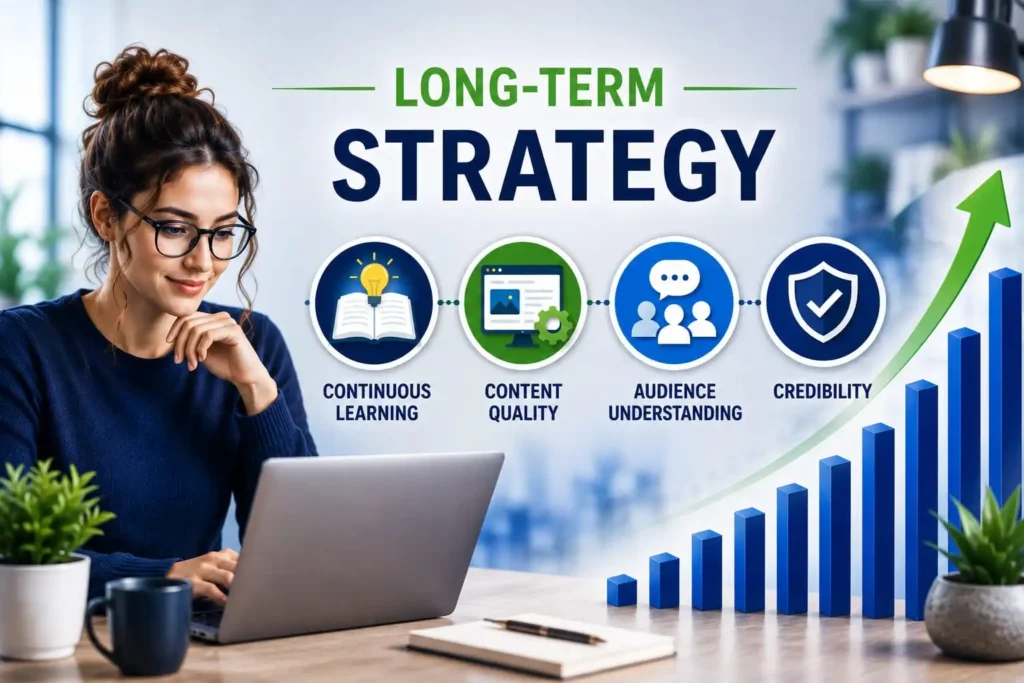
Many beginners focus heavily on short-term results.
However, long-term success usually comes from gradual improvement.
Continuous Learning
Digital marketing evolves constantly.
New technologies, search engine updates, and consumer behaviors create new opportunities and challenges.
The more you learn, the better positioned you’ll be to adapt.
Improving Content Quality
Over time, review and improve your existing content.
Updating older articles can often produce better results than constantly publishing new content.
Fresh, accurate, and comprehensive content tends to perform better in search results.
Understanding Your Audience
The better you understand your audience, the easier it becomes to create content that meets their needs.
Listen to questions, comments, and feedback.
These insights often reveal valuable content opportunities.
Building Professional Credibility
Professional credibility develops over time through:
- Consistency
- Expertise
- Accuracy
- Transparency
- High-quality content
A strong reputation can improve both audience loyalty and search visibility.
Quick Summary
Affiliate marketing is a performance-based marketing model where you earn commissions by referring customers to products or services.
Rather than creating your own products, you focus on helping people discover solutions that fit their needs.
Success typically depends on:
- Choosing a niche
- Building a website
- Creating high-quality content
- Learning SEO
- Growing an audience
- Earning audience trust
- Remaining consistent
Although results vary, affiliate marketing continues to be one of the most accessible online business models available in 2026.
Key Takeaways
- Affiliate marketing allows you to earn commissions by referring customers.
- You don’t need to create your own products or manage inventory.
- Credibility and reputation play major roles in long-term success.
- Blogging remains one of the strongest affiliate marketing strategies.
- Focus on helping your audience rather than selling aggressively.
- Consistency often matters more than perfection.
- SEO can generate long-term traffic opportunities.
- Building professional credibility takes time.
- High-quality content is essential.
- Affiliate marketing rewards patience and continuous learning.
Frequently Asked Questions
Is affiliate marketing good for beginners?
Yes.
Many beginners start affiliate marketing because startup costs are relatively low and the business model is easy to understand.
Do I need a website?
A website is not always required, but it remains one of the best long-term platforms for building an affiliate marketing business.
A website provides greater control, content ownership, and search traffic opportunities.
How much money can beginners make?
Results vary significantly.
Some beginners earn their first commissions within a few months, while others take longer.
Success depends on factors such as content quality, niche selection, audience growth, and consistency.
Is affiliate marketing still worth starting in 2026?
Yes.
Businesses continue using affiliate programs, and consumers continue researching products online before making purchasing decisions.
This creates ongoing opportunities for publishers who provide useful information.
Can affiliate marketing become a full-time income source?
Some people eventually build full-time businesses through affiliate marketing.
However, meaningful results often require patience, skill development, and long-term commitment.
Do affiliate programs cost money to join?
Most affiliate programs are free to join.
However, some programs may have approval requirements based on your website, content quality, or audience.
Can I do affiliate marketing without social media?
Yes.
Many affiliate marketers focus primarily on blogging, SEO, email marketing, and niche websites rather than social media platforms.
What is the best affiliate marketing platform for beginners?
There is no single best platform.
Many beginners start with a blog because it provides long-term content ownership and search traffic opportunities.
How long does affiliate marketing take to work?
There is no guaranteed timeline.
Some people earn commissions within a few months, while others may need longer.
Consistency and content quality often play major roles in long-term success.
Final Thoughts
Affiliate marketing remains one of the most accessible online business models available in 2026.
It offers an opportunity to create content, help people make informed decisions, and potentially earn commissions through ethical recommendations.
Remember, every successful affiliate marketer started as a beginner. The key is staying consistent and continuing to learn as you grow.
However, sustainable success rarely comes from shortcuts.
It comes from helping people, earning trust, and continuously improving your skills.
Like any legitimate online business, affiliate marketing requires learning, patience, and consistent effort. While results vary from person to person, focusing on helpful content and audience needs can create a strong foundation for long-term growth.
Start small and focus on learning one step at a time. Choose a niche that genuinely interests you, build your website, create useful content, and gradually develop your SEO skills.
Focus on helping real people solve real problems.
You don’t need to know everything before you begin.
The most important step is getting started.
Over time, the knowledge, experience, content library, and professional reputation you build can create opportunities that continue growing for years to come.
About Digi-Earning Hub
Digi-Earning Hub publishes educational content focused on freelancing, blogging, SEO, affiliate marketing, online business, and digital skills.
Our mission is to help beginners learn practical online skills through clear, ethical, and beginner-friendly resources that support long-term professional growth.
We believe sustainable success comes from continuous learning, professionalism, and providing genuine value to audiences and clients.
Whether you’re interested in blogging, freelancing, affiliate marketing, or building an online business, our goal is to provide practical information that helps you make informed decisions and develop valuable digital skills for the future.