
How to Start a Blog in the USA (2026): Step-by-Step Beginner's Guide
Introduction
If you’ve ever thought about starting a blog, you’re not alone.
Every year, thousands of people across the United States launch blogs to share their experiences, teach others, build an online presence, or create new opportunities for themselves. Some start as a hobby. Others begin with a business idea, a personal passion, or a desire to build something of their own online.
The internet has changed dramatically over the last decade. Social media platforms rise and fall. Algorithms change. Trends come and go.
Yet blogging continues to remain relevant.
Why?
Because people still search for answers every day.
Whether someone wants to learn a new skill, compare products, solve a problem, or understand a topic better, search engines remain one of the first places they turn to.
That’s where blogging creates opportunities.
A well-written blog post can help someone find exactly what they’re looking for months or even years after it’s published. Unlike a social media post that may disappear from a feed within hours, blog content has the potential to keep working for you long after you hit publish.
Another reason blogging remains valuable is ownership.
When you build a blog, you’re creating something you control. You aren’t dependent on a platform deciding who sees your content. Your website belongs to you.
That doesn’t mean blogging is easy or that success happens overnight.
Building a successful blog takes time, consistency, and a willingness to learn. But for people who enjoy sharing knowledge, helping others, and creating valuable content, blogging can be incredibly rewarding.
Whether you’re a student, freelancer, entrepreneur, stay-at-home parent, or complete beginner, this guide will walk you through the process of starting a blog in the USA in 2026.
If you’re interested in exploring other beginner-friendly online opportunities, check out our Beginner’s Guide to Earning Money Online in the USA.
You’ll learn how to choose the right niche, register a domain name, set up WordPress, create content people actually want to read, improve your visibility in search engines, and build a strong foundation for long-term growth.
Let’s start with the basics.
What Is a Blog?

A blog is a website where content is published regularly around a specific topic or group of related topics.
Some blogs focus on teaching practical skills. Others share personal experiences, industry insights, product reviews, tutorials, or educational resources.
For example, a personal finance blog may help readers learn how to budget, save money, or invest wisely.
A technology blog might cover software reviews, gadget comparisons, and industry news.
A fitness blog may publish workout routines, nutrition advice, and wellness tips.
The format can vary, but the goal is usually the same:
Provide useful information that helps readers solve a problem, learn something new, or make a better decision.
Blogs can cover nearly any subject, including:
- Personal finance
- Online business
- Technology
- Education
- Productivity
- Health and wellness
- Freelancing
- Travel
- Digital marketing
- Food and recipes
One of the biggest advantages of blogging is longevity.
A helpful article published today could still attract visitors a year from now.
That’s one reason many businesses invest heavily in content marketing. Helpful content continues generating traffic long after it’s created.
Why Blogging Is Still Worth Starting in 2026

Every few years, someone claims blogging is dead.
People said it when social media became popular.
They said it when video content exploded.
They said it again when AI tools became mainstream.
Yet blogs continue attracting readers every day.
The reason is simple: people are constantly searching for information.
When someone types a question into Google, they’re looking for answers. If your blog provides those answers clearly and accurately, there’s an opportunity for your content to be discovered.
Let’s look at a few reasons blogging remains relevant.
Search Engines Still Drive Massive Traffic
Think about your own online habits.
When you want to learn something, compare products, or solve a problem, chances are you use a search engine.
Millions of people do the same thing every day.
Search traffic remains one of the most valuable sources of website visitors because those users are actively looking for information.
Unlike some marketing methods that interrupt people, blogging allows you to meet readers exactly when they need help.
Blogging Helps Build Authority
Trust matters online.
People are far more likely to buy from, hire, or follow someone they trust.
A blog gives you an opportunity to demonstrate knowledge, share experience, and provide value before asking for anything in return.
Over time, readers begin recognizing your website as a helpful resource.
That trust can become one of your greatest assets.
Blogs Support Multiple Business Models
One of the reasons blogging remains attractive is flexibility.
A blog can support many different goals.
Some people use blogs to promote freelance services.
Others use them to build audiences for newsletters or online communities.
Many businesses use blogs to attract potential customers.
Common monetization opportunities include:
- Affiliate marketing
- Display advertising
- Digital products
- Online courses
- Consulting services
- Membership communities
- Sponsored content
Not every blog earns income, and results vary significantly, but blogging can create opportunities that extend beyond website traffic alone.
Blogging Develops Valuable Skills
Even if your primary goal isn’t making money, blogging teaches practical skills that remain useful in today’s digital economy.
You’ll likely improve your:
- Writing skills
- Research abilities
- Communication skills
- SEO knowledge
- Marketing understanding
- Website management skills
These skills can benefit entrepreneurs, freelancers, employees, and business owners alike.
Want to build multiple online income skills alongside blogging? Read our Beginner’s Guide to Earning Money Online in the USA.
Step 1: Choose the Right Blogging Niche
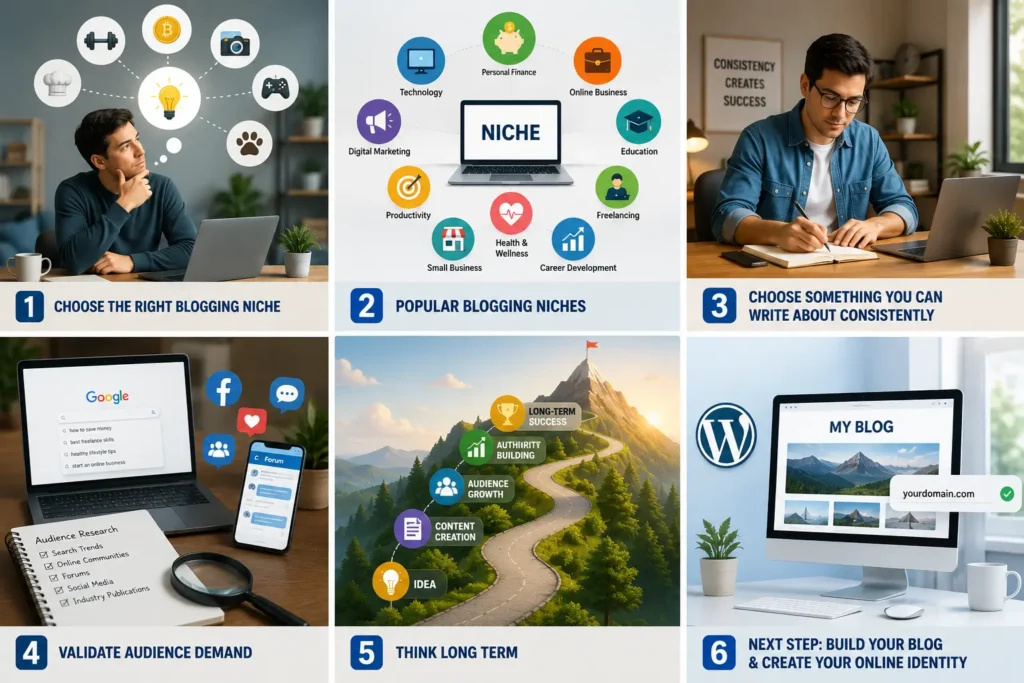
Before purchasing a domain name or installing WordPress, you need to decide what your blog will focus on.
This is known as choosing a niche.
A niche is the primary topic your website covers.
One of the most common mistakes new bloggers make is trying to write about everything.
For example, imagine a blog that publishes articles about fitness, cryptocurrency, cooking, travel, pet care, and video games all at the same time.
Readers may become confused about what the website actually offers.
Search engines can struggle to understand the site’s expertise as well.
That’s why choosing a focused niche is important.
A clear niche helps attract the right audience and allows you to build authority more effectively.
Popular Blogging Niches
Some popular niches include:
- Personal finance
- Technology
- Online business
- Digital marketing
- Education
- Productivity
- Health and wellness
- Freelancing
- Small business
- Career development
Interested in freelancing as a niche? Read our How to Start Freelancing in the USA: A Complete Beginner’s Guide (2026).
The best niche for you isn’t necessarily the most popular one.
Instead, look for a topic that sits at the intersection of:
- Personal interest
- Audience demand
- Long-term potential
Choose Something You Can Write About Consistently
Many beginners choose a niche based solely on earning potential.
That’s understandable, but it can create problems later.
If you don’t genuinely enjoy learning about the topic, staying motivated becomes difficult.
Successful bloggers often spend months or years creating content.
Choosing a topic you find interesting makes consistency much easier.
Ask yourself:
- Would I still enjoy learning about this topic a year from now?
- Can I create dozens of articles around this subject?
- Am I willing to keep improving my knowledge over time?
If the answer is yes, you’re moving in the right direction.
Validate Audience Demand
Interest alone isn’t enough.
You also want to confirm that people are actively searching for information related to your niche.
Simple research can help.
Look at:
- Google search suggestions
- Online communities
- Forums
- Social media discussions
- Industry publications
If people regularly ask questions about a topic, that’s often a sign of content opportunities.
Think Long Term
The strongest blogging niches allow you to create content for years.
For example, a blog focused on personal finance can cover budgeting, saving, investing, debt management, retirement planning, and dozens of related topics.
A niche with broad content opportunities gives you more room to grow.
Once you’ve chosen a niche, the next step is creating your blog’s online identity.
Step 2: Choose a Professional Domain Name
Once you’ve selected your niche, it’s time to choose a domain name.
Your domain name is your blog’s address on the internet. It’s what people type into their browser to visit your website.
A good domain name can help people remember your website, while a confusing one can make it harder to build recognition over time.
What Makes a Good Domain Name?
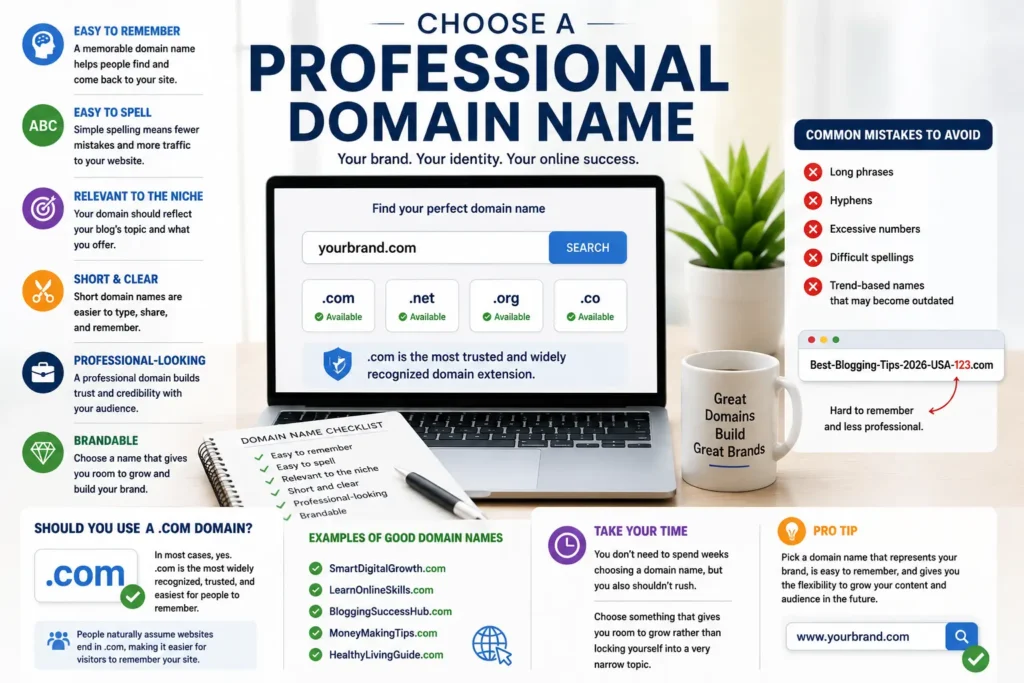
The best domain names are usually:
- Easy to remember
- Easy to spell
- Relevant to the niche
- Short and clear
- Professional-looking
- Brandable
For example:
- SmartDigitalGrowth.com
- LearnOnlineSkills.com
- BloggingSuccessHub.com
These names are simple, easy to understand, and give visitors an idea of what the website might be about.
Common Mistakes to Avoid
Many beginners accidentally make their domain names more complicated than necessary.
Try to avoid:
- Long phrases
- Hyphens
- Excessive numbers
- Difficult spellings
- Trend-based names that may become outdated
For example, a domain like:
Best-Blogging-Tips-2026-USA-123.com
is much harder to remember than something simple and brandable.
Should You Use a .com Domain?
In most cases, yes.
While there are many domain extensions available today, .com remains the most widely recognized and trusted option.
People naturally assume websites end in .com, making it easier for visitors to remember your site.
If your preferred .com domain is available, it’s usually the best choice.
Take Your Time
You don’t need to spend weeks choosing a domain name, but you also shouldn’t rush the decision.
Remember, your domain name may become part of your brand for years to come.
Choose something that gives you room to grow rather than locking yourself into a very narrow topic.
Step 3: Choose Reliable Web Hosting

After securing your domain name, you’ll need web hosting.
Web hosting is the service that stores your website’s files and makes your blog accessible online.
Without hosting, visitors won’t be able to access your website.
Why Hosting Matters
Some beginners choose the cheapest hosting available and later discover that poor performance creates problems.
Website speed, uptime, security, and reliability all affect the user experience.
If your website loads slowly or frequently goes offline, visitors may leave before reading your content.
Search engines also consider website performance when evaluating user experience.
Features to Look For
When comparing hosting providers, look for:
- Fast loading speeds
- Strong uptime records
- Automatic backups
- Security protection
- Easy WordPress installation
- Responsive customer support
- Scalability as your traffic grows
Beginner-Friendly Hosting Options
Several hosting providers are popular among beginner bloggers because they offer user-friendly setups and reliable performance.
Many new bloggers start with:
- Bluehost
- Hostinger
- SiteGround
- DreamHost
The best option depends on your budget and preferences, but reliability should always be a priority.
Think Long-Term
Hosting isn’t just about launching your website.
It’s about creating a stable foundation that can support growth over time.
Choosing a quality hosting provider from the beginning can save you headaches later.
How Much Does It Cost to Start a Blog in the USA?
One reason blogging remains attractive is that the startup costs are relatively low compared to many other business ventures.
You don’t need an office, employees, or expensive equipment.
For most beginners, the initial investment is manageable.
Typical Blogging Expenses
You may encounter costs such as:
- Domain registration
- Web hosting
- Premium themes (optional)
- Email marketing tools (optional)
- SEO tools (optional)
Many successful bloggers start with only a domain name and hosting plan.
Everything else can be added later as the website grows.
Don't Overspend Early
One of the biggest mistakes beginners make is purchasing too many tools before they’ve published meaningful content.
It’s easy to get distracted by premium software and advanced features.
In reality, your first priority should be learning how to create useful content and build an audience.
You can always upgrade your tools as your blog grows.
Step 4: Install WordPress
Once your hosting account is ready, it’s time to install WordPress.
WordPress powers a significant percentage of websites across the internet and remains the most popular content management system in the world.
There’s a good reason for that.
WordPress offers an excellent balance of flexibility, simplicity, and scalability.
Why Most Bloggers Choose WordPress
WordPress is popular because it allows beginners to create professional websites without needing coding skills.
Some key advantages include:
- User-friendly dashboard
- Thousands of themes
- Extensive plugin ecosystem
- Strong SEO capabilities
- Mobile-friendly designs
- Large support community
Whether you’re creating a personal blog or building a large content website, WordPress can grow with you.
Installation Is Easier Than Ever
Most hosting providers now offer one-click WordPress installation.
In many cases, you can have a functioning website online within minutes.
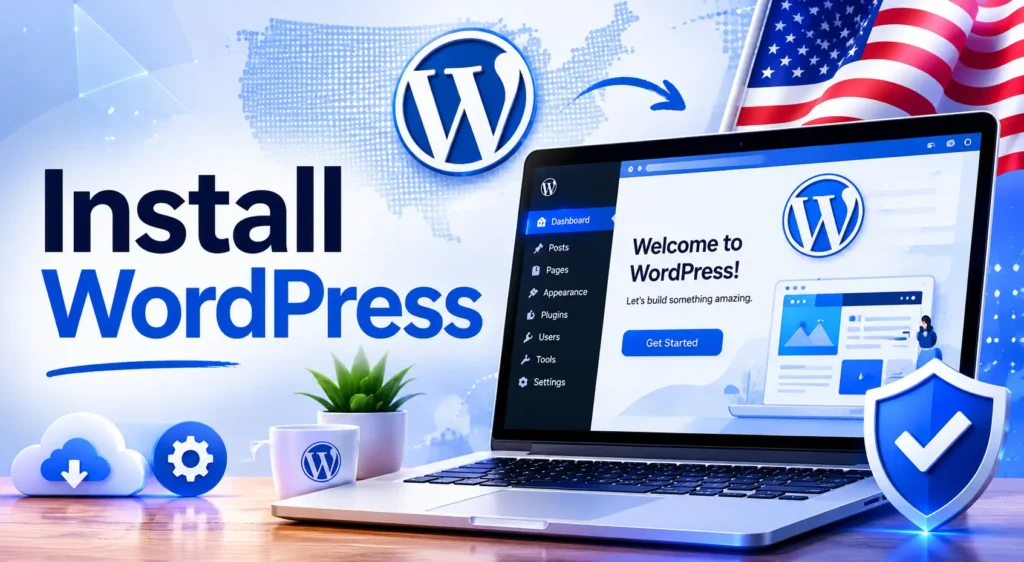
After installation, you’ll gain access to the WordPress dashboard where you’ll manage content, pages, plugins, and website settings.
Don't Worry About Perfection
Many beginners spend too much time trying to make their website look perfect before publishing content.
Your design can always improve later.
The most important thing is getting started.
A simple, clean website with helpful content will almost always outperform a beautiful website with little value.
Step 5: Choose a Professional Theme
Your theme controls the appearance of your website.
Think of it as the visual design framework for your blog.
What Makes a Good Theme?
A quality theme should be:
- Fast-loading
- Mobile-friendly
- Easy to navigate
- Professionally designed
- Regularly updated
Visitors should be able to find information easily without feeling overwhelmed.
Keep It Simple
Many beginners choose flashy themes filled with animations, effects, and unnecessary features.
While these designs may seem impressive initially, they often create a poor user experience.
Simple websites are usually easier to navigate, faster to load, and more enjoyable to read.
When it comes to blogging, clarity almost always beats complexity.
Step 6: Install Essential WordPress Plugins
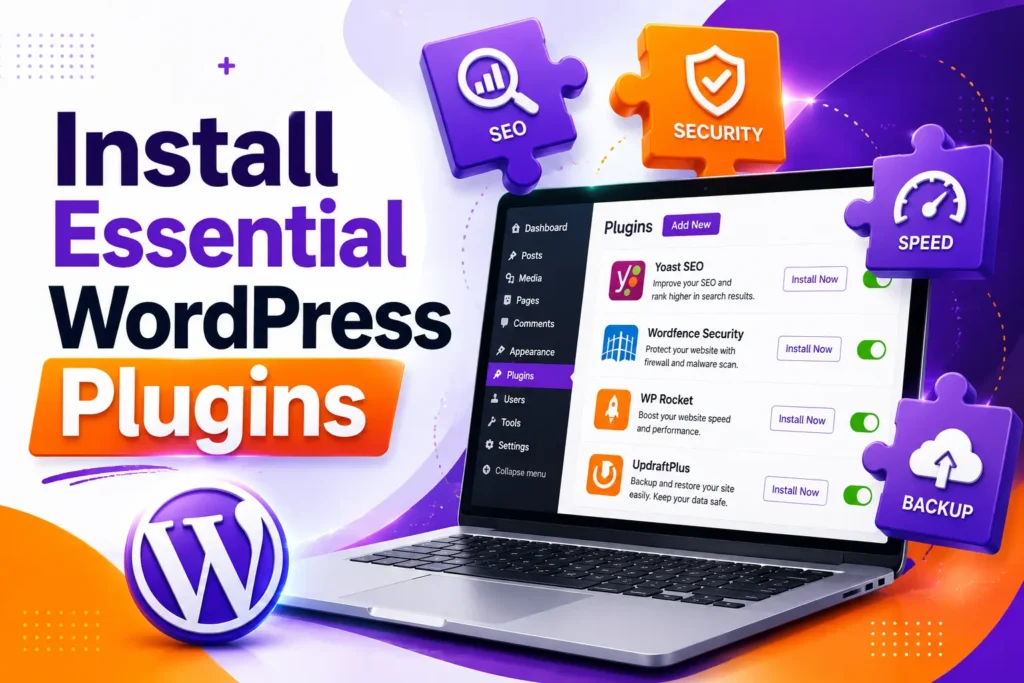
Plugins add additional functionality to your website.
You can think of them as apps for WordPress.
SEO Plugins
An SEO plugin helps optimize your content for search engines.
Popular options include:
- Rank Math SEO
- Yoast SEO
These tools can assist with title tags, meta descriptions, sitemaps, and other SEO elements.
Security Plugins
Website security should never be ignored.
Security plugins help protect your website from common threats.
A popular option is:
- Wordfence Security
Backup Plugins
Backups provide peace of mind.
If something goes wrong, a recent backup can help restore your website.
Many bloggers use:
- UpdraftPlus
Contact Form Plugins
Every professional website should provide a way for visitors to get in touch.
Popular contact form plugins include:
- WPForms
Performance Plugins
Website speed matters.
Caching and optimization plugins can improve loading times and overall performance.
A commonly recommended option is:
- LiteSpeed Cache
Avoid Plugin Overload
More plugins do not automatically mean a better website.
Installing unnecessary plugins can slow down performance and create compatibility issues.
Focus on quality rather than quantity.
Step 7: Create Essential Website Pages
Before publishing blog posts, take time to create the core pages every professional website should have.
These pages help build trust and improve transparency.
About Page
Your About page is often one of the most visited sections of your website.
People want to know who is behind the content they’re reading.
You don’t need to write your life story.
Simply explain:
- Who you are
- What your blog covers
- Why readers should trust your content
- How your website helps visitors
Authenticity matters more than sounding impressive.
Contact Page
A Contact page makes it easy for readers, business partners, and potential clients to reach you.
Providing a clear communication channel increases credibility.
Privacy Policy
A Privacy Policy explains how visitor information is collected, stored, and used.
Many advertising and analytics services require websites to have one.
Disclaimer
If your blog discusses topics such as:
- Finance
- Business
- Marketing
- Online income
- Health
a disclaimer can help clarify the purpose of your content.
Terms and Conditions
This page outlines the rules for using your website.
While it may not receive much traffic, it contributes to professionalism and transparency.
Step 8: Start Creating Helpful Content
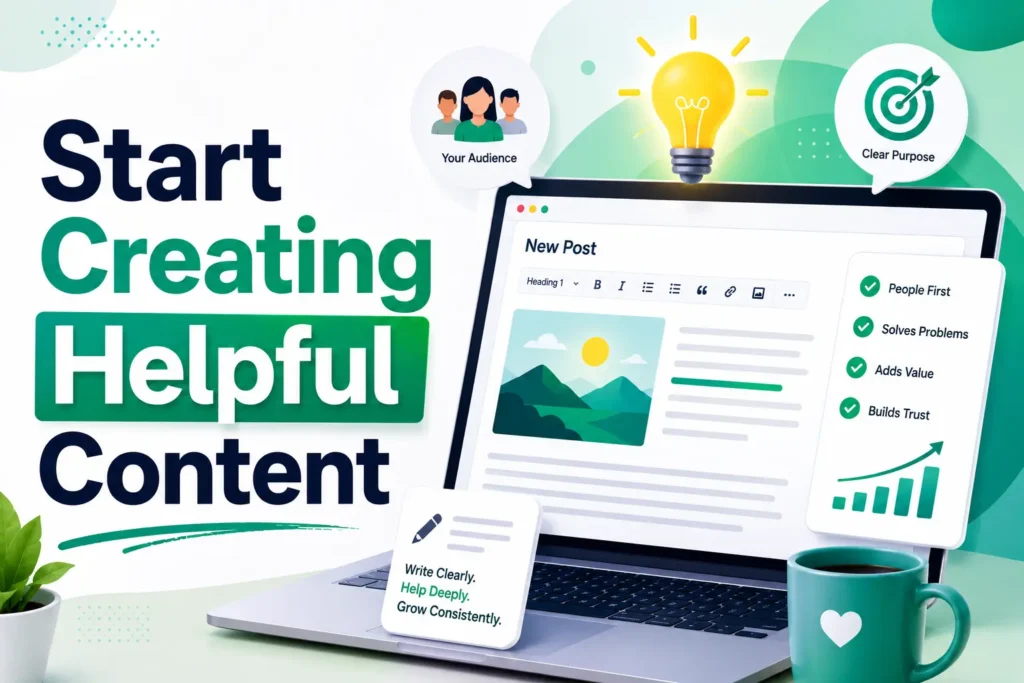
Now comes the most important part of blogging.
Creating content.
Many beginners spend weeks choosing themes, adjusting colors, and tweaking website settings.
Meanwhile, they publish very little content.
That’s a mistake.
Content is what attracts readers.
Content is what builds trust.
Content is what gives search engines a reason to rank your website.
Without content, a blog cannot grow.
Focus on Helping People
Before writing any article, ask yourself a simple question:
“What problem does this content solve?”
The most successful blog posts are usually those that provide clear, useful answers.
People visit websites because they want help.
Your job is to make that help easy to find and easy to understand.
Types of Content Beginners Can Create
You don’t need to be an expert to create useful content.
Some common formats include:
- Beginner guides
- Tutorials
- Resource lists
- Product comparisons
- Frequently asked questions
- Step-by-step instructions
Focus on clarity and usefulness rather than trying to sound overly technical.
If you’re interested in creating content as a service, read our How to Start Freelancing in the USA: A Complete Beginner’s Guide (2026).
Write for Humans First
Many new bloggers become obsessed with search engines.
SEO matters, but readers matter more.
If your content genuinely helps people, you’ll be building a much stronger foundation for long-term success.
Great blogs don’t succeed because they chase algorithms.
They succeed because they consistently provide value.
Understand Search Intent Before You Write
One of the biggest mistakes new bloggers make is creating content without understanding what readers are actually looking for.
You may write an excellent article, but if it doesn’t match the user’s intent, it will struggle to perform.
Search intent refers to the reason behind a search query.
In simple terms, it answers the question:
“What is the person hoping to find?”
Understanding search intent helps you create content that satisfies readers while improving your chances of ranking in search results.
The Four Main Types of Search Intent
Informational Intent
The user wants to learn something.
Examples:
- How to start a blog
- What is SEO
- How does affiliate marketing work
These searches require educational content.
Commercial Intent
The user is researching options before making a decision.
Examples:
- Best hosting for bloggers
- Best WordPress themes
- Top SEO tools
These searches often perform well with comparison articles and reviews.
Transactional Intent
The user is ready to take action.
Examples:
- Buy web hosting
- Register a domain name
- Purchase an SEO course
These searches are closer to a purchase decision.
Navigational Intent
The user wants to visit a specific website or page.
Examples:
- WordPress login
- Google Analytics
- Search Console
When creating content, always consider what the reader expects to find.
The closer your content matches their intent, the better the user experience will be.
Build Topic Clusters Instead of Random Articles
Many new bloggers publish random articles without a clear strategy.
While this may feel productive, it often slows growth.
A more effective approach is building topic clusters.
Topic clusters help organize your content around a central subject.
For example:
Main Topic: Blogging
Supporting Articles:
- How to Choose a Blogging Niche
- How to Register a Domain Name
- WordPress Setup Guide
- Blogging SEO Tips
- How to Make Money Blogging
- Best Blogging Tools
Each supporting article connects back to the main topic.
This structure helps search engines understand your expertise while making it easier for readers to explore related content.
Over time, topic clusters can strengthen your website’s authority within a niche.
Focus on Evergreen Content
Not all content has the same lifespan.
Some articles become outdated quickly.
Others remain useful for years.
This long-lasting content is known as evergreen content.
Examples include:
- Beginner guides
- Tutorials
- How-to articles
- Educational resources
- Frequently asked questions
For example, an article about “How to Start a Blog” can remain relevant for years with occasional updates.
Evergreen content is often one of the most valuable assets a blogger can create because it can continue attracting traffic long after publication.
When planning content, prioritize topics that provide long-term value.
Step 9: Learn Basic SEO
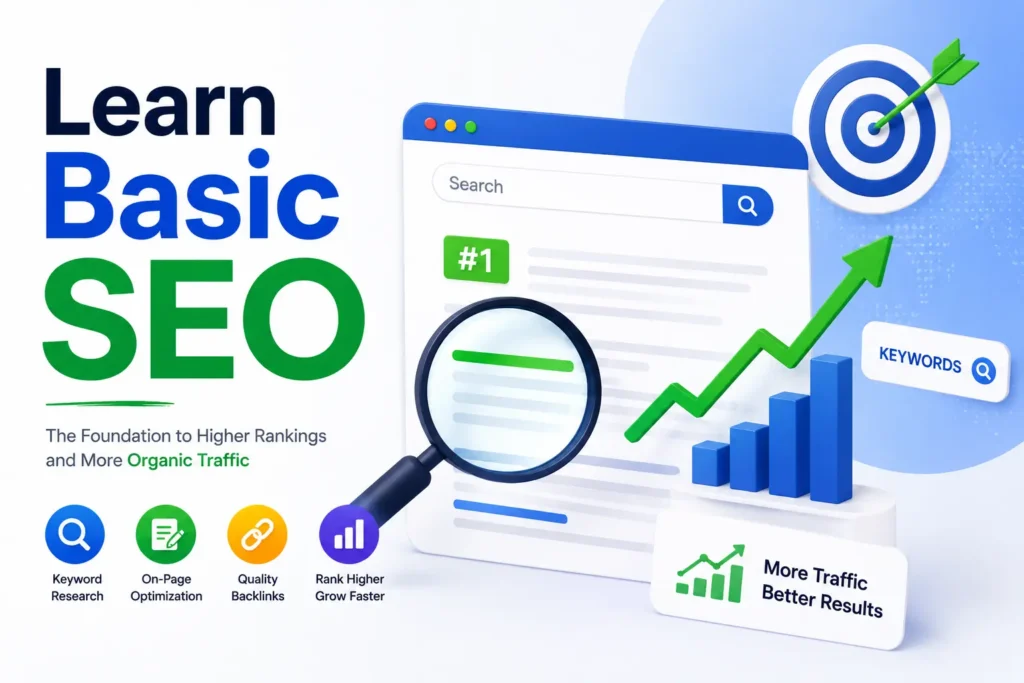
Search Engine Optimization, commonly known as SEO, helps search engines understand your content and connect it with people searching for information.
For many blogs, SEO becomes one of the most sustainable sources of traffic.
The goal isn’t to manipulate search engines.
The goal is to make your content easier to discover.
Keyword Research
Keyword research helps you identify what people are searching for online.
When you understand the language your audience uses, you can create content that directly addresses their questions.
Create Clear Titles
Your title is often the first thing readers see.
A strong title should:
- Clearly describe the topic
- Include the primary keyword naturally
- Encourage curiosity without being misleading
Write Helpful Meta Descriptions
A meta description is the short summary that may appear in search results.
While it doesn’t directly determine rankings, it can influence click-through rates.
Use Internal Links
Internal links connect related articles on your website.
They help readers discover additional content while helping search engines understand your site’s structure.
Improve Page Speed
Nobody enjoys waiting for a slow website to load.
Faster websites generally provide a better user experience and can support stronger search performance.
Prioritize Mobile Users
Most internet users now browse on mobile devices.
Your blog should be easy to read and navigate on phones and tablets.
How to Find Keywords for Your Blog
Keyword research doesn’t have to be complicated.
As a beginner, your goal is simply to understand what people are searching for.
Several free tools can help:
- Google Trends
- Google Search suggestions
- Google Search Console
- AnswerThePublic
- Keyword Surfer
One useful strategy is targeting long-tail keywords.
These are longer, more specific search phrases.
Examples include:
- How to start a blog in the USA
- Blogging tips for beginners
- Best WordPress plugins for new bloggers
Long-tail keywords often have less competition and attract highly targeted visitors.
As your website grows, you can gradually expand into broader topics.
A Simple On-Page SEO Checklist
Before publishing any article, review the following checklist.
Content
✓ Include your primary keyword naturally
✓ Use descriptive headings
✓ Answer the reader’s question clearly
✓ Include related keywords naturally
✓ Add internal links where appropriate
User Experience
✓ Use short paragraphs
✓ Break up text with headings
✓ Use bullet points when helpful
✓ Optimize images
✓ Ensure mobile friendliness
Technical SEO
✓ Create SEO-friendly URLs
✓ Add image alt text
✓ Submit your sitemap
✓ Check indexing status in Search Console
Small improvements made consistently can produce significant results over time.
Create a Content Plan You Can Maintain
One of the biggest reasons blogs fail isn’t lack of talent.
It’s inconsistency.
Many people start with enthusiasm and publish several articles during their first month.
Then life gets busy.
Publishing slows down.
Eventually, the blog becomes inactive.
A content plan helps prevent this.
Start Realistically
Don’t commit to publishing five articles every week if your schedule won’t allow it.
Instead, choose a pace you can maintain.
Examples:
- One article per week
- Two articles per month
- One in-depth guide every month
Consistency matters far more than aggressive publishing schedules.
Use a Content Calendar
A simple calendar can help you:
- Plan topics
- Schedule content
- Track progress
- Stay organized
The goal isn’t perfection.
The goal is creating a sustainable process.
Build an Email List Early
Many new bloggers focus entirely on traffic.
That’s understandable.
Traffic is exciting.
But one of the smartest things you can do is start building an email list from the beginning.
An email list allows you to communicate directly with your audience.
Unlike social media platforms, you aren’t dependent on algorithms deciding who sees your content.
Benefits of Email Marketing
An email list can help you:
- Share new content
- Build stronger relationships
- Encourage repeat visits
- Promote products or services
- Grow a loyal audience
Even if you only gain a few subscribers each month initially, those subscribers can become valuable long-term supporters.
Understanding EEAT
Google emphasizes several important quality signals often referred to as EEAT:
- Experience
- Expertise
- Authoritativeness
- Trustworthiness
While many bloggers focus heavily on keywords, trust is equally important.
Ways to Strengthen Trust
Consider:
- Creating a detailed About page
- Including author information
- Providing accurate content
- Updating outdated articles
- Making contact information accessible
- Being transparent about affiliations
Trust takes time to build, but it can become one of your strongest competitive advantages.
Using Google Search Console
Google Search Console is one of the most valuable free tools available to bloggers.
It provides insights into how your website performs in search results.
You can use it to:
- Monitor keyword visibility
- Submit sitemaps
- Identify indexing issues
- Track search performance
- Discover technical problems
Many beginners overlook Search Console, but it can provide information that helps guide future content decisions.
Using Google Analytics
Google Analytics helps you understand what visitors do after they arrive on your website.
You can learn:
- Which pages receive the most traffic
- Where visitors come from
- How long people stay on your website
- Which content performs best
These insights can help you improve content strategy and understand audience behavior.
Rather than guessing what works, you’ll have data to guide decisions.
Free and Paid Blogging Tools
The internet offers countless blogging tools.
As a beginner, it’s easy to feel overwhelmed.
Remember that tools support your strategy.
They don’t replace it.
Useful Free Tools
- Google Search Console
- Google Analytics
- Google Trends
- Canva
- Google Docs
Popular Paid Tools
- Premium WordPress themes
- Email marketing platforms
- SEO software
- Keyword research tools
- Design software
Start simple and upgrade when your needs justify the investment.
How to Promote Your Blog
Publishing content is only half the process.
People need to discover your content.
Promotion helps make that happen.
Search Engine Optimization
SEO remains one of the most sustainable traffic sources because it helps people find your content while actively searching for information.
Social Media
Share your content on platforms where your audience spends time.
Focus on providing value rather than constantly promoting yourself.
Email Marketing
Email remains one of the most effective ways to build long-term audience relationships.
Internal Linking
Guide readers toward additional useful content on your website.
Online Communities
Participate in relevant communities and contribute genuinely helpful insights.
The best promotion often comes from consistently helping people.
How Blogs Can Generate Income
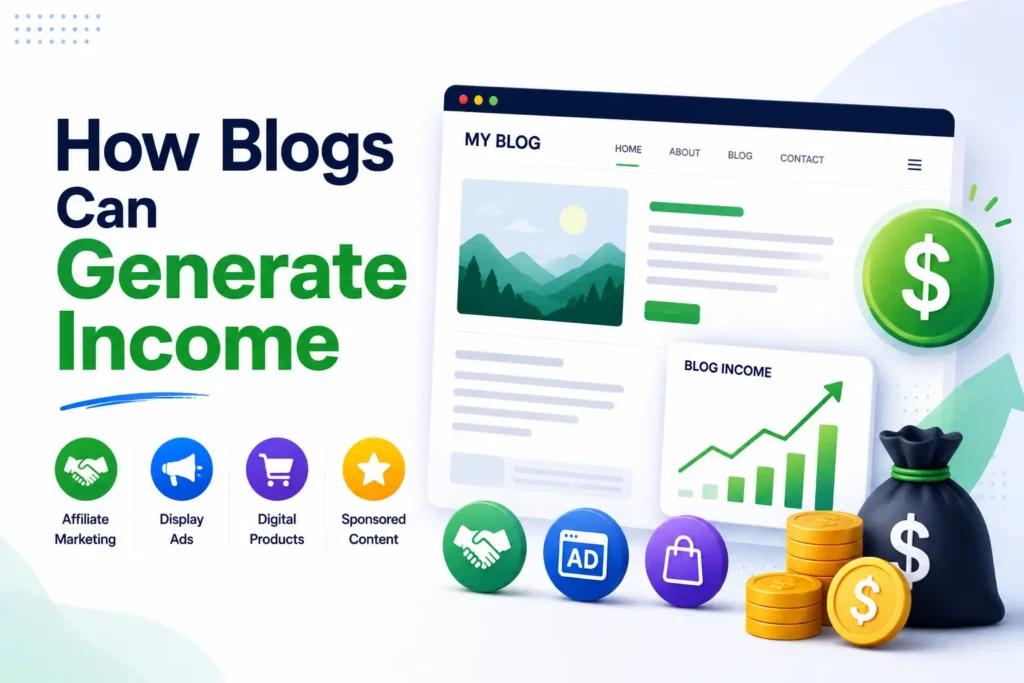
Many people become interested in blogging because of the potential for future income.
It’s important to approach monetization realistically.
A blog is not a guaranteed source of income.
Successful monetization usually follows audience growth, trust, and consistent value creation.
Display Advertising
Advertising networks allow websites to earn revenue from traffic.
Affiliate Marketing
Affiliate marketing involves recommending products or services that may help your audience.
Many bloggers also offer freelance services to clients as they build authority and experience online.
Learn more in our How to Start Freelancing in the USA guide.
Digital Products
Many bloggers create:
- Ebooks
- Templates
- Guides
- Printables
Online Courses
Courses allow creators to teach skills through structured learning experiences.
Consulting Services
Some bloggers use their expertise to offer personalized guidance.
Freelance Services
A blog can serve as a portfolio that attracts potential clients.
Membership Communities
Some websites offer premium content to paying subscribers.
The strongest monetization strategies focus on helping readers rather than simply generating revenue.
How Long Does It Take to Make Money From a Blog?
This is one of the most common questions beginners ask.
The honest answer is that it varies.
Some blogs begin generating income relatively quickly.
Others take much longer.
Factors include:
- Competition
- Content quality
- SEO strategy
- Publishing consistency
- Promotion efforts
Most successful bloggers view blogging as a long-term project.
The goal should be building a valuable resource first.
Income opportunities often become easier once trust and traffic have been established.
Common SEO Mistakes New Bloggers Make
Avoiding common mistakes can save significant time and frustration.
Common issues include:
- Ignoring keyword research
- Writing misleading titles
- Publishing thin content
- Neglecting internal links
- Overlooking mobile optimization
- Ignoring page speed
- Failing to update older content
Focus on creating genuinely helpful content rather than chasing shortcuts.
Common Blogging Mistakes to Avoid
Many beginners unknowingly slow their progress.
Examples include:
- Publishing inconsistently
- Covering too many unrelated topics
- Expecting quick results
- Obsessing over design instead of content
- Focusing only on monetization
- Ignoring audience needs
The most successful blogs usually grow through patience, consistency, and continuous improvement.
Frequently Asked Questions
Is blogging still worth it in 2026?
Yes. Millions of people continue using search engines every day to find information, solve problems, and learn new skills.
Do I need coding skills to start a blog?
No. Platforms like WordPress make blogging accessible to beginners without coding experience.
How often should I publish blog posts?
Consistency matters more than frequency. Choose a schedule you can realistically maintain.
How long does it take to see results?
Results vary based on niche, competition, content quality, SEO efforts, and consistency.
What is the best niche for a blog?
The best niche combines personal interest, audience demand, and long-term growth potential.
Can blogging become a source of income?
It can, but success depends on many factors, including content quality, audience trust, traffic, and ongoing effort.
Conclusion

Starting a blog in the USA in 2026 remains one of the most accessible ways to build an online presence, share knowledge, and develop valuable digital skills.
You don’t need to know everything before you begin.
In fact, many successful bloggers started with little more than curiosity, determination, and a willingness to learn.
The most important step isn’t choosing the perfect niche, finding the perfect theme, or writing the perfect article.
The most important step is getting started.
Choose a topic that genuinely interests you.
Focus on helping people.
Create useful content consistently.
Learn from your mistakes.
Improve as you go.
Every successful blog started with a first post that no one had read before.
What matters is continuing to show up, continuing to learn, and continuing to provide value.
Blogging is a long-term journey, not a short-term shortcut.
If you stay focused on helping your audience and consistently creating valuable content, your blog can become a meaningful digital asset for years to come.
A year from now, you’ll likely be grateful that you started today.