
How to Start Freelancing in the USA: A Complete Beginner’s Guide (2026)
Introduction
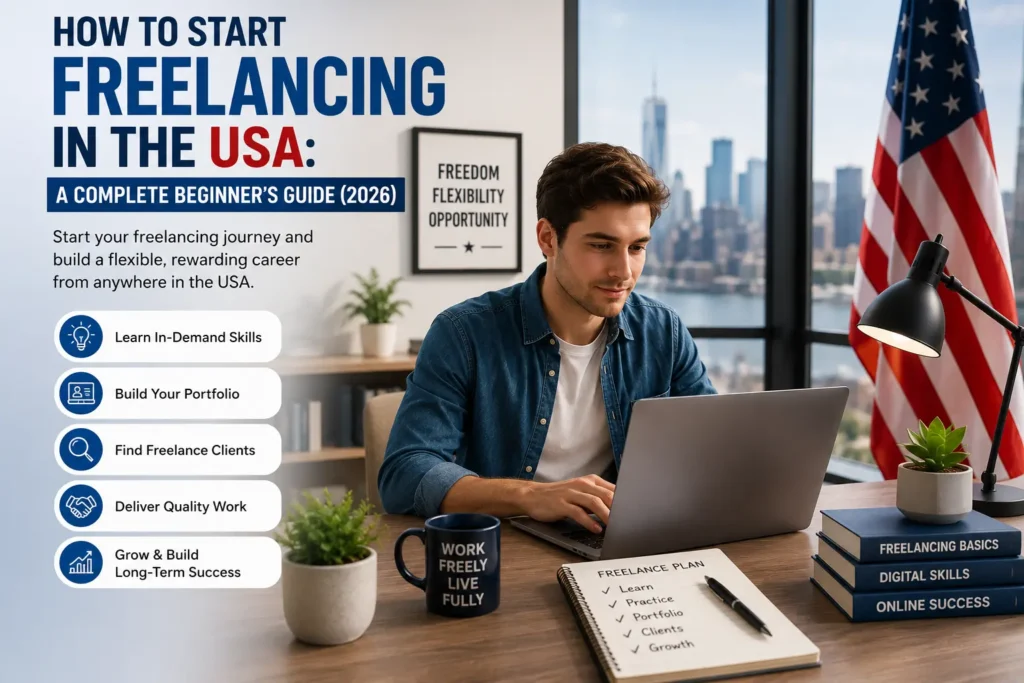
Freelancing has become an increasingly popular option for people across the United States who want more flexibility, additional income opportunities, or greater control over their careers.
Whether you are a college student, a stay-at-home parent, a full-time employee looking for extra income, or someone interested in working independently, freelancing offers opportunities to earn online while building valuable real-world experience.
The growing demand for remote services, digital communication, and online collaboration has made freelancing more accessible than ever before. Businesses of all sizes now hire freelancers for content writing, graphic design, web development, digital marketing, virtual assistance, video editing, customer support, and many other professional services.
One of the biggest advantages of freelancing is that it allows individuals to build skills while creating opportunities for professional growth. Unlike traditional employment, freelancing gives people the ability to work with different clients, explore various industries, and develop a more flexible career path.
This guide explains how beginners in the USA can start freelancing step by step, build practical skills, find clients, and create long-term opportunities without unrealistic expectations or misleading promises.
If you’re new to online earning, check out our Beginner’s Guide to Earning Money Online in the USA to explore additional beginner-friendly digital income opportunities.
What Is Freelancing?
Freelancing is a form of self-employment where individuals provide services to clients on a project-by-project basis rather than working as permanent employees for a single company.
Instead of receiving assignments from one employer, freelancers often work with multiple clients and have greater control over their schedules, workloads, and professional development.
Common freelance services include:
- Content writing
- Copywriting
- Graphic design
- Social media management
- Search Engine Optimization (SEO)
- Website development
- Video editing
- Virtual assistance
- Data entry
- Email marketing
Freelancing allows people to develop practical experience, strengthen their skills, and potentially create multiple income sources over time.
Why Freelancing Is Growing in the USA
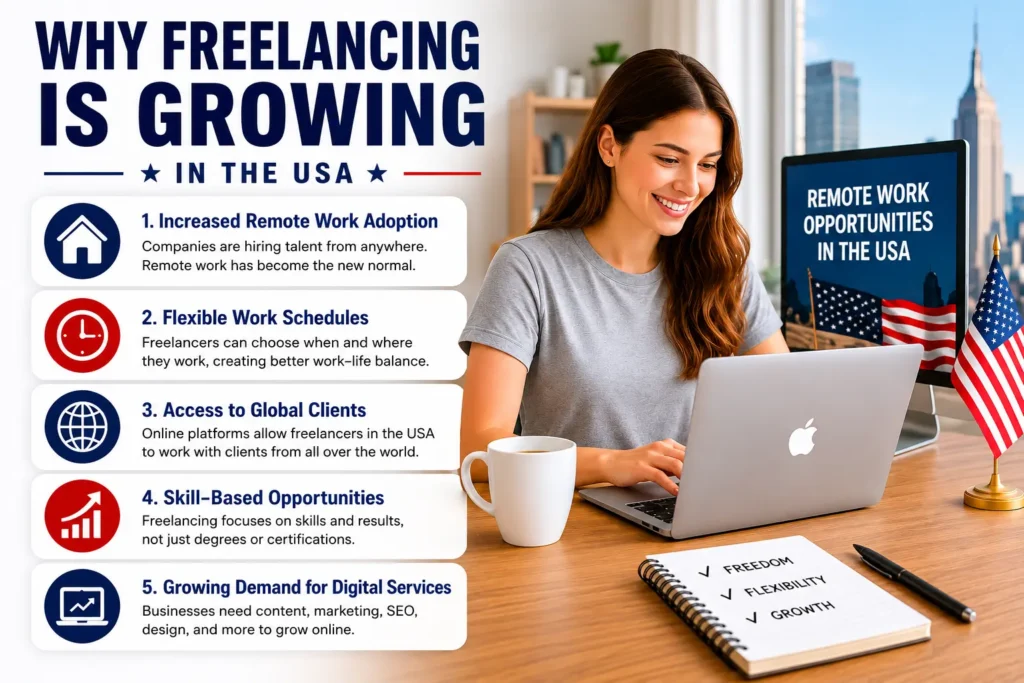
1. Increased Remote Work Adoption
Remote work has become a normal part of many industries. Companies are increasingly comfortable hiring professionals regardless of their physical location, creating more opportunities for freelancers.
2. Flexible Work Schedules
Many freelancers appreciate the freedom to choose when and where they work. This flexibility can be especially valuable for parents, students, and professionals managing multiple responsibilities.
3. Access to Global Clients
Online freelance platforms allow professionals in the USA to work with clients from around the world. This access expands potential opportunities beyond local markets.
4. Skill-Based Opportunities
Many freelance careers focus on practical skills rather than formal degrees. This makes freelancing accessible to motivated individuals who are willing to learn and improve consistently.
5. Growing Demand for Digital Services
As more businesses move online, the demand for digital services continues to increase. Content creation, SEO, digital marketing, website management, and social media support are all areas where freelancers can provide value.
Benefits of Freelancing
Greater Flexibility
Freelancers often have the freedom to manage their own schedules, choose projects that align with their interests, and work from different locations.
Continuous Skill Development
Working with different clients exposes freelancers to new challenges, industries, and learning opportunities. This helps accelerate professional growth.
Diverse Experience
Freelancers frequently gain experience across multiple industries, which can strengthen their expertise and broaden their career opportunities.
Income Potential
As freelancers gain experience, improve their skills, and build stronger portfolios, they may become eligible for more competitive projects and higher-paying opportunities.
Independence
Freelancing allows individuals to take greater ownership of their professional development and career direction.
Best Freelance Skills for Beginners
Choosing the right skill is one of the most important decisions for new freelancers.
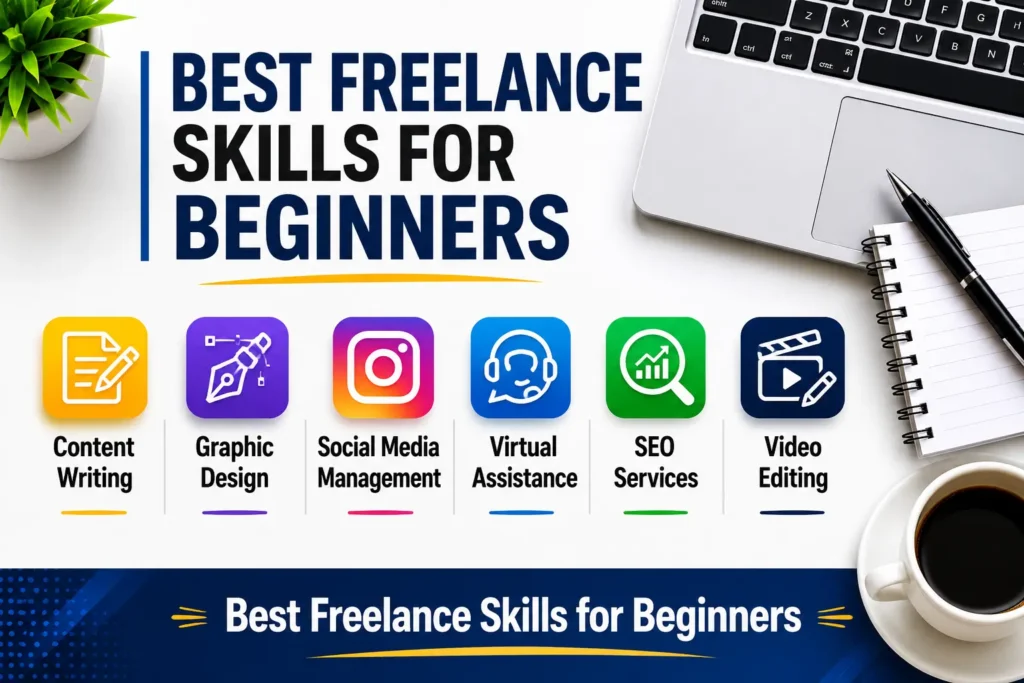
Content Writing
Content writers create blog posts, website content, articles, product descriptions, and educational resources.
This skill is popular because businesses constantly need quality content to engage customers and improve online visibility.
Graphic Design
Graphic designers create visual content such as logos, social media graphics, marketing materials, presentations, and brand assets.
Social Media Management
Many businesses hire freelancers to create content, manage accounts, engage with audiences, and support marketing campaigns.
Virtual Assistance
Virtual assistants help businesses with administrative tasks such as scheduling, email management, customer communication, and data organization.
SEO Services
SEO professionals help websites improve their visibility in search engines through content optimization, keyword research, and technical improvements.
Video Editing
Video content continues to grow in popularity. Businesses, creators, and educators often hire freelancers to edit videos for marketing, education, and entertainment purposes.
How to Choose Your Freelance Skill
Many beginners make the mistake of trying to learn too many skills at once.
A better approach is to focus on one area and build a strong foundation before expanding into additional services.
When choosing a freelance skill, consider:
- Personal interests
- Existing experience
- Market demand
- Learning resources available
- Long-term growth opportunities
- Earning potential
Ask yourself:
- What activities do I enjoy?
- What skills am I willing to practice consistently?
- Which services are businesses actively seeking?
Choosing one skill and committing to it for several months often produces better results than constantly switching between different options.
How to Learn Freelance Skills
Building freelance skills requires consistent learning and practice.
Fortunately, there are many accessible learning resources available today.
Popular learning methods include:
- Educational blogs
- Online courses
- YouTube tutorials
- Industry communities
- Practice projects
- Professional documentation
The goal is not perfection.
The goal is steady improvement over time.
Many successful freelancers began with little or no experience. What separated them from others was their willingness to continue learning and applying new knowledge consistently.
Create a learning schedule and dedicate time each week to improving your chosen skill.
Small improvements can create significant long-term growth.
Creating Your First Portfolio

A portfolio demonstrates your abilities and helps potential clients evaluate your work.
One of the most common concerns among beginners is not having previous client experience.
Fortunately, a portfolio does not require paid projects.
You can create a portfolio by:
- Building practice projects
- Creating sample work
- Completing personal projects
- Offering volunteer services
- Documenting learning exercises
For example:
- Writers can create sample blog articles.
- Designers can create fictional brand designs.
- SEO beginners can perform website audits.
- Social media managers can build content calendars.
A strong portfolio often matters more than formal experience because it shows clients what you can actually do.
Best Freelance Platforms for Beginners
Fiverr
Fiverr allows freelancers to create service listings called gigs.
Potential benefits include:
- Beginner-friendly setup
- Global visibility
- Wide variety of service categories
- Flexible pricing structures
Success on Fiverr often depends on creating clear service descriptions, professional profiles, and strong customer experiences.
Upwork
Upwork connects freelancers with clients seeking professional services.
Potential benefits include:
- Large client marketplace
- Long-term project opportunities
- Professional networking potential
- Diverse industries and projects
Many freelancers use Upwork to build ongoing client relationships.
Other Freelance Platforms
Additional platforms may include:
- Freelancer
- PeoplePerHour
- Guru
- Industry-specific freelance marketplaces
Each platform has different strengths, so beginners may benefit from exploring multiple options.
Fiverr vs. Upwork: Which Is Better for Beginners?
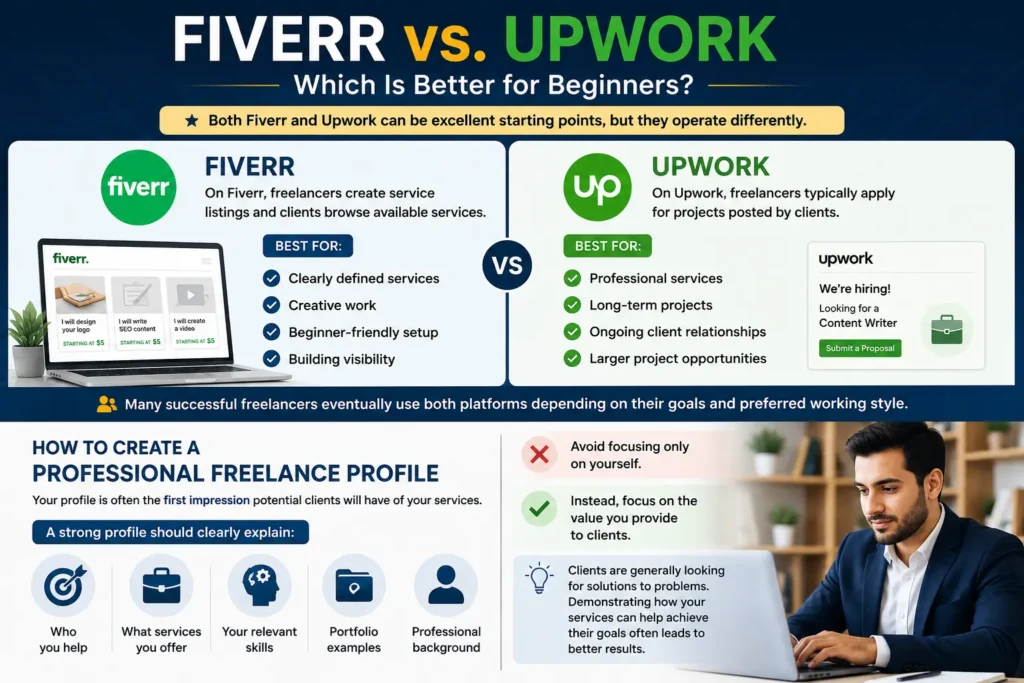
Both Fiverr and Upwork can be excellent starting points, but they operate differently.
Fiverr
On Fiverr, freelancers create service listings and clients browse available services.
Best for:
- Clearly defined services
- Creative work
- Beginner-friendly setup
- Building visibility
Upwork
On Upwork, freelancers typically apply for projects posted by clients.
Best for:
- Professional services
- Long-term projects
- Ongoing client relationships
- Larger project opportunities
Many successful freelancers eventually use both platforms depending on their goals and preferred working style.
How to Create a Professional Freelance Profile
Your profile is often the first impression potential clients will have of your services.
A strong profile should clearly explain:
- Who you help
- What services you offer
- Your relevant skills
- Portfolio examples
- Professional background
Avoid focusing only on yourself.
Instead, focus on the value you provide to clients.
Clients are generally looking for solutions to problems. Demonstrating how your services can help achieve their goals often leads to better results.
Finding Your First Clients
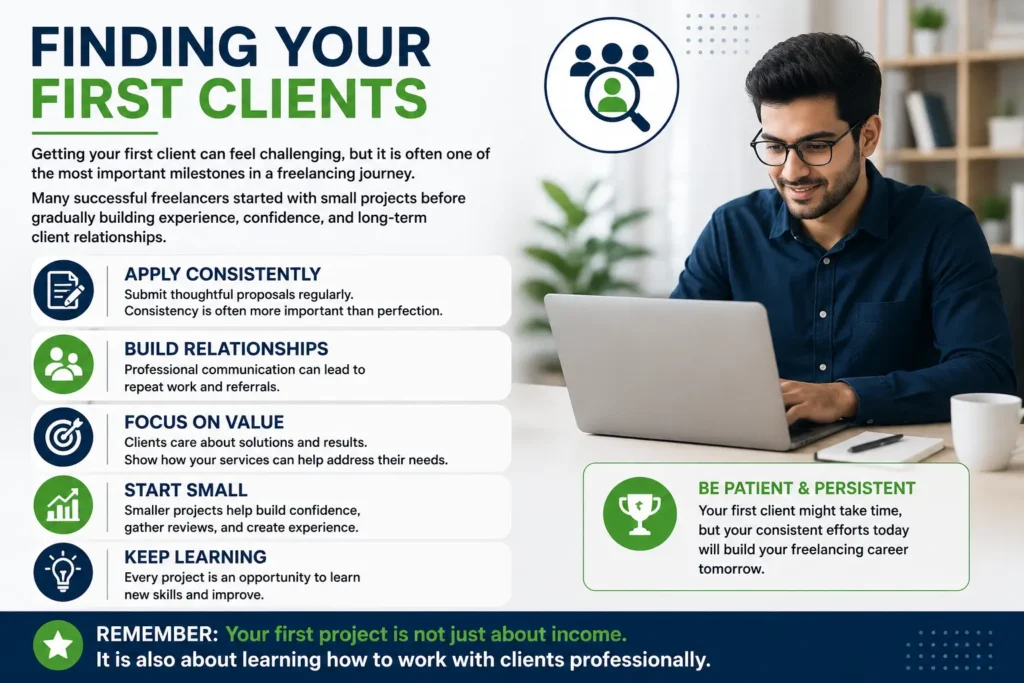
Getting your first client can feel challenging, but it is often one of the most important milestones in a freelancing journey.
Many successful freelancers started with small projects before gradually building experience, confidence, and long-term client relationships.
Apply Consistently
Submit thoughtful proposals regularly.
Consistency is often more important than perfection.
Build Relationships
Professional communication can lead to repeat work and referrals.
Focus on Value
Clients care about solutions and results.
Show how your services can help address their needs.
Start Small
Smaller projects help build confidence, gather reviews, and create experience.
Remember that your first project is not just about income. It is also about learning how to work with clients professionally.
How Freelancers Get Paid in the USA
Freelancers may receive payments through several methods.
Common options include:
- Direct bank transfers
- PayPal
- Payoneer
- Platform payment systems
- Business payment processors
Payment structures can vary depending on the client and project.
Examples include:
- Hourly rates
- Fixed-price projects
- Monthly retainers
- Ongoing contracts
Before beginning any project, it is important to clarify payment expectations, deadlines, and project requirements.
Clear communication helps avoid misunderstandings.
Time Management Tips for Freelancers
Time management is one of the most valuable skills freelancers can develop.
Without proper organization, it can become difficult to manage projects efficiently.
Helpful strategies include:
Create a Daily Schedule
Plan work hours and prioritize important tasks.
Set Realistic Deadlines
Allow enough time to complete projects without unnecessary stress.
Avoid Multitasking
Focusing on one task at a time often improves productivity and quality.
Track Your Progress
Monitoring completed work can help maintain consistency and identify areas for improvement.
Take Breaks
Regular breaks can support focus and long-term productivity.
Strong time management habits often contribute significantly to freelance success.
Common Freelancing Mistakes to Avoid
Expecting Immediate Results
Building a freelance career takes time, learning, and persistence.
Learning Too Many Skills at Once
Focus often leads to faster improvement.
Ignoring Communication
Professional communication helps build trust and credibility.
Charging Too Little
While beginners may start with competitive pricing, it is important to value your time and skills appropriately.
Underestimating Consistency
Long-term success often comes from steady effort rather than short bursts of motivation.
Building Long-Term Freelance Success
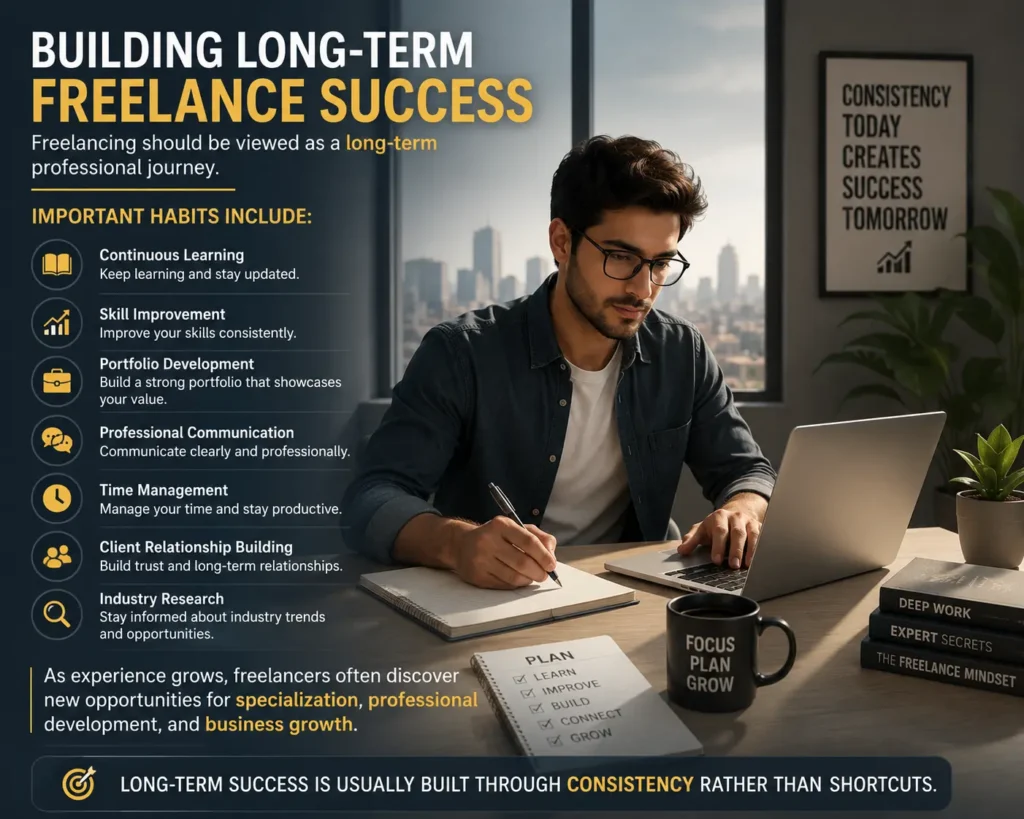
Freelancing should be viewed as a long-term professional journey.
Important habits include:
- Continuous learning
- Skill improvement
- Portfolio development
- Professional communication
- Time management
- Client relationship building
- Industry research
As experience grows, freelancers often discover new opportunities for specialization, professional development, and business growth.
Long-term success is usually built through consistency rather than shortcuts.
Is Freelancing Right for You?
Freelancing may be a good fit if you:
- Enjoy learning new skills
- Value flexibility
- Are willing to work independently
- Can stay consistent
- Want to build digital experience
- Are comfortable solving problems
While freelancing is not a shortcut to success, it can provide valuable opportunities for individuals willing to learn, adapt, and improve over time.
Frequently Asked Questions
Can beginners start freelancing with no experience?
Yes. Many freelancers begin with little or no professional experience. Building skills, creating a portfolio, and completing practice projects can help beginners get started.
How long does it take to get the first freelance client?
The timeline varies. Some freelancers find opportunities quickly, while others may need more time to build skills, improve profiles, and submit proposals consistently.
Do I need a college degree to become a freelancer?
Not always. Many freelance opportunities focus more on skills, portfolio quality, communication, and reliability than formal education.
Which freelance skill is best for beginners?
The best skill depends on your interests and goals. Content writing, virtual assistance, social media management, graphic design, and SEO are common starting points.
Conclusion
Freelancing offers beginners in the USA a practical way to develop valuable skills, gain professional experience, and explore online income opportunities.
Freelancing is not about finding overnight success. It is about developing valuable skills, building professional relationships, and creating opportunities through consistent effort. By focusing on learning, delivering quality work, and improving over time, beginners can gradually build a rewarding freelance career.
Start with one skill, practice regularly, build your portfolio, and continue improving. Small steps taken consistently often lead to the strongest long-term results.
Your freelancing journey can begin today with a willingness to learn, adapt, and keep moving forward.