
Common SEO Mistakes New Bloggers Should Avoid

Introduction
Starting a blog can be one of the most rewarding ways to build an online presence, share your expertise, and create long-term income opportunities.
Many successful bloggers started exactly where you are today—with a brand-new website, a handful of published articles, and the goal of attracting consistent organic traffic.
However, nearly every beginner encounters the same challenge.
Getting traffic is often much harder than creating content.
You can spend hours researching a topic, writing a detailed article, formatting everything carefully, and finally clicking Publish—only to discover weeks later that very few people are finding your content through search.
If that sounds familiar, you’re certainly not alone.
In many cases, new bloggers don’t struggle because they lack writing skills or valuable ideas. Instead, they unknowingly make common SEO mistakes that reduce their visibility in search results.
Search Engine Optimization (SEO) helps search engines understand your content so they can connect your pages with people actively searching for the information you provide.
When implemented effectively, SEO becomes one of the most reliable and cost-effective ways to generate consistent, long-term website traffic.
According to Google Search Central, creating helpful, people-first content remains one of the most important factors for sustainable search visibility. Google’s guidance consistently encourages publishers to create content that genuinely helps readers instead of focusing only on rankings.
The good news is that most beginner SEO mistakes are completely avoidable.
By identifying and correcting these issues early, you’ll build a stronger foundation for your website, improve your visibility in search results, and create a better experience for your audience.
In this guide, you’ll learn the common SEO mistakes that prevent many new bloggers from growing their websites, understand why they affect rankings, and discover practical ways to avoid them from the very beginning.
If you’ve recently launched your website, you may also find How to Start a Blog in the USA helpful as you continue building your blogging foundation.
Quick Summary
If you’re looking for the fastest way to improve your blog’s SEO, start with these essential best practices:
- Research relevant keywords before writing every article.
- Focus on long-tail keywords with realistic ranking opportunities.
- Create content that fully satisfies your readers’ search intent.
- Write clear, compelling headlines that encourage clicks.
- Publish in-depth, genuinely valuable articles instead of short, generic posts.
- Use internal links to connect related content across your website.
- Optimize every image with descriptive file names and meaningful alt text.
- Write engaging SEO titles and meta descriptions for every page.
- Make sure your website is mobile-friendly and loads quickly.
- Stay consistent—lasting SEO success is built over time, not overnight
Why SEO Matters for New Bloggers

Many first-time bloggers assume that publishing more articles automatically leads to more traffic.
Unfortunately, that’s not how SEO works.
Every day, Google’s ranking systems evaluate billions of searches to determine which pages deserve to appear for each query. Those decisions are based on factors such as relevance, content quality, search intent, user experience, and website authority.
Without proper SEO, even outstanding content can remain virtually invisible.
Instead of thinking about SEO as a technical checklist, think of it as the bridge between your content and the people already searching for the information you provide.
When your pages are properly optimized, they become much easier for search engines to understand, index, and present to the right audience.
A well-optimized blog can help you:
- Reach people who are actively searching for your topic.
- Increase organic traffic over time.
- Improve the overall user experience.
- Build trust and authority within your niche.
- Generate leads, subscribers, or customers.
- Create sustainable, long-term growth.
Unlike paid advertising, organic traffic can continue growing long after an article is published.
That’s why learning SEO early is one of the smartest investments you can make as your blog grows.
Mistake 1: Skipping Keyword Research
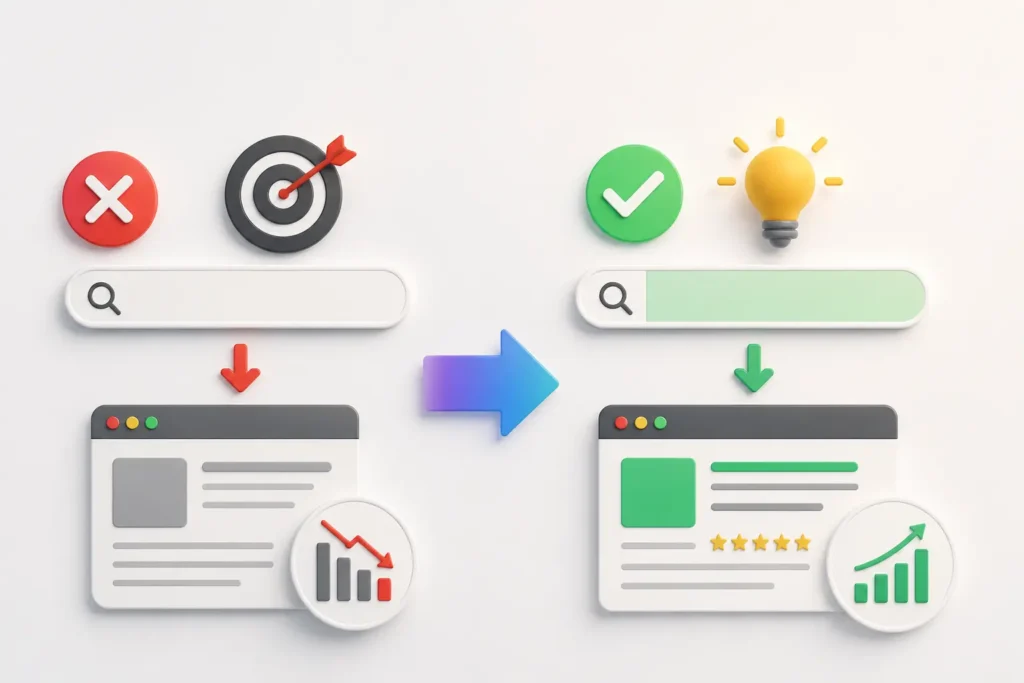
One of the biggest reasons new blogs struggle to attract organic traffic is skipping keyword research before creating content.
Many beginners choose topics based on personal interest or assumptions without confirming whether people are actually searching for those subjects.
At first, this may not seem like a major issue.
However, imagine spending several hours researching, writing, and polishing a detailed article—only to realize later that very few people are searching for the topic you covered.
Unfortunately, this happens more often than many new bloggers expect.
I made the same mistake when I published some of my earliest blog posts. I focused on topics that I believed people would search for instead of validating those ideas through proper keyword research. As a result, several well-written articles received very little organic traffic despite the time and effort I invested in them.
Without keyword research, it’s easy to create content that offers real value but has limited opportunities to reach the people it’s intended to help.
Why This Hurts SEO
Publishing content without keyword research can lead to several challenges:
- You may target topics with little or no search demand.
- Valuable traffic opportunities can be missed.
- Your content may compete against well-established websites.
- Your articles may not align with what users are actually searching for.
Even a well-written article can struggle to gain visibility if it targets the wrong keyword or fails to match user intent.
A Better Approach
Before writing your next blog post, take a few minutes to research your topic carefully.
Focus on:
- Finding relevant keywords.
- Prioritizing long-tail search queries.
- Understanding the search intent behind each keyword.
- Evaluating ranking difficulty.
- Choosing topics that genuinely match your audience’s needs.
Before writing your next blog post, take a few minutes to research your topic carefully.
Example
Instead of targeting a broad keyword like:
❌ SEO
Choose a more specific search phrase:
✅ SEO mistakes for beginner bloggers
Or instead of:
❌ Blogging
Consider:
✅ Common blogging mistakes new website owners should avoid
Long-tail keywords typically have lower competition and clearer search intent, making them much more achievable for newer websites.
If you’re still deciding which niche to focus on, be sure to read Best Blogging Niches for Beginners in the USA for additional guidance and inspiration.
Mistake 2: Targeting Highly Competitive Keywords
Many new bloggers make the mistake of targeting highly competitive keywords before their websites have established authority.
Popular topics such as:
- SEO
- Blogging
- Affiliate Marketing
- Make Money Online
- Digital Marketing
may attract substantial search volume, but they’re also dominated by well-established websites with years of experience, strong backlink profiles, and extensive content libraries.
Why This Can Hold You Back
When your website is still new, Google’s ranking systems have limited signals to evaluate your expertise, authority, and trustworthiness.
As a result, competing for broad, highly competitive keywords can be extremely challenging—even if your content is well-written and genuinely helpful.
A Practical Example
Imagine publishing an article targeting the keyword:
You’ll likely compete with some of the largest marketing websites on the internet.
Now compare that with:
This keyword targets a more specific audience with clearer search intent, giving newer websites a much better opportunity to compete.
Recommended Strategy
Instead of pursuing broad, highly competitive keywords, focus on:
- Long-tail keywords
- Beginner-focused topics
- Question-based searches
- Niche-specific audience segments
- Lower-competition opportunities
Small ranking wins often create momentum.
As your website grows in authority, you’ll be in a much stronger position to target broader, more competitive keywords.
Mistake 3: Ignoring Search Intent

Understanding search intent is one of the most valuable SEO skills a blogger can develop.
Every search begins with a purpose. People search because they’re looking for answers, solutions, or specific information.
The goal of modern search engines is to deliver the page that best satisfies that intent.
If your content doesn’t meet readers’ expectations, achieving strong rankings becomes much more difficult.
Example
Suppose someone searches for:
Most users expect to find:
- A step-by-step guide
- Platform recommendations
- Website setup instructions
- Beginner-friendly advice
They’re probably not looking for:
- The history of blogging
- Industry statistics
- Advanced technical discussions
Even accurate and well-written content may struggle to perform if it doesn’t answer the question users are actually asking.
Best Practice
Before creating a new article:
- Search your target keyword.
- Review the top-ranking pages.
- Identify what readers expect to find.
- Create content that provides the most complete and helpful answer.
When your content aligns with user expectations, everyone benefits.
Readers quickly find the information they need, and search engines are more likely to recognize your page as a highly relevant result.
Mistake 4: Writing Weak Headlines
Your headline is often the first impression readers have of your content.
Even if your article appears in search results, a weak or generic headline can discourage people from clicking, limiting your traffic before they even visit your page.
Example
Weak Headline
Blog SEO Tips
Stronger Headline
Common SEO Mistakes New Bloggers Should Avoid
The second headline immediately tells readers:
- Who the article is for
- What they’ll learn
- Why it’s worth their time
A clear, benefit-driven headline not only improves click-through rates (CTR) but also sets accurate expectations before someone clicks.
Best Practices for Writing Better Headlines
When writing headlines:
- Be specific.
- Focus on the reader’s benefit.
- Include your primary keyword naturally.
- Address a clear problem or question.
- Avoid exaggerated or misleading clickbait
Remember, your headline isn’t just about attracting clicks.
It also builds trust by accurately reflecting the value your article delivers.
Mistake 5: Publishing Thin Content
Another common mistake is publishing content that lacks depth or fails to answer the reader’s question completely.
Many beginners believe that publishing more articles automatically leads to better results.
In reality, consistently creating comprehensive, people-first content is far more effective than producing a large number of short, generic posts.
Modern search algorithms increasingly reward content that demonstrates experience, expertise, authority, and genuine usefulness.
Signs Your Content May Be Too Thin
Your article may need more depth if it:
- Covers a topic only briefly.
- Includes few practical examples.
- Offers little actionable advice.
- Leaves important questions unanswered.
- Provides limited value beyond basic information.
Why Thin Content Struggles to Rank
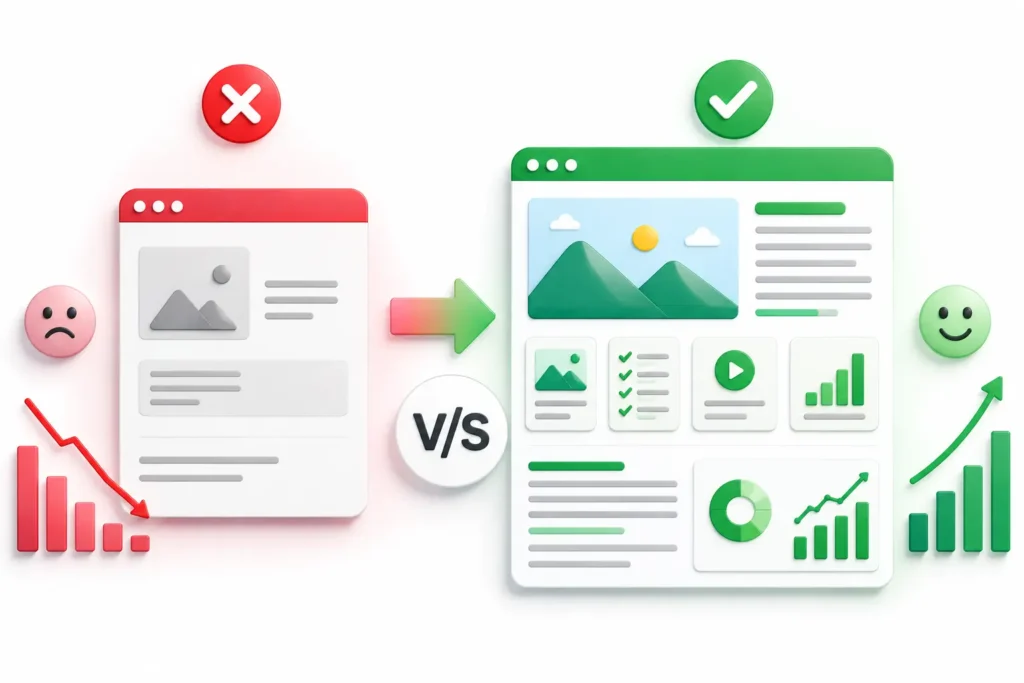
Imagine searching for:
Which article would you trust more?
One that provides practical strategies, real-world examples, and step-by-step guidance?
Or one that briefly summarizes the topic without offering meaningful advice?
Most readers naturally choose the more comprehensive resource.
Search systems often make a similar decision because their goal is to surface content that provides the greatest value to users.
A Better Approach
Instead of asking:
“How many words should this article contain?”
Ask yourself:
“Have I answered every important question my reader might have?”
That simple shift in mindset can dramatically improve the quality of your content.
Whenever possible, include:
- Real-world examples
- Actionable recommendations
- Step-by-step instructions
- Clear explanations
- Practical takeaways
Comprehensive content doesn’t mean adding unnecessary words.
It means giving readers the information they came for—and making sure they leave without needing to search for another resource.
For additional inspiration, read How to Make Money Blogging in the USA for Beginners: A Step-by-Step Guide, which demonstrates how detailed, reader-focused content creates a better user experience.
For additional SEO guidance, Google Search Central also recommends creating people-first content that prioritizes usefulness over search rankings alone.
Mistake 6: Overlooking Internal Linking
Internal linking is one of the simplest yet most effective ways to strengthen your blog’s SEO, but it’s a strategy many new bloggers overlook.
An internal link connects one page on your website to another, helping both readers and search engines understand how your content is organized.
Although internal links may seem like a small detail, they can make a meaningful difference in your website’s long-term performance.
Why Internal Links Matter
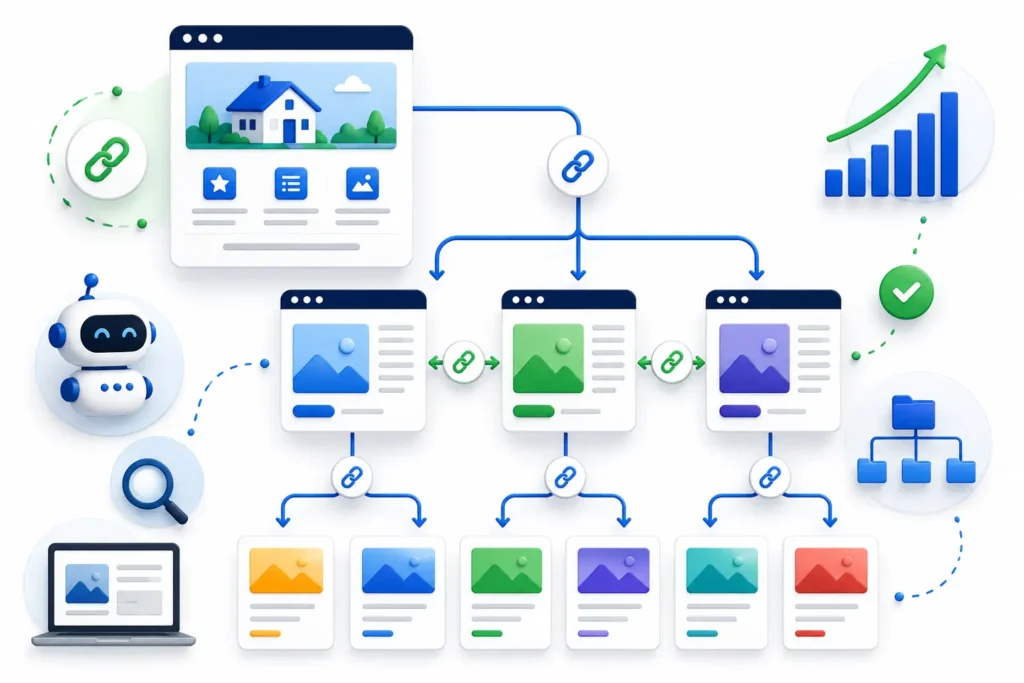
A thoughtful internal linking strategy can help you:
- Improve website navigation.
- Guide readers to related content.
- Help search engines discover and understand your pages.
- Distribute authority across your website.
- Increase page views and user engagement.
Think about how you browse online.
When you find an article that’s genuinely useful, you’re much more likely to continue exploring if it includes links to other relevant resources.
Your visitors behave the same way.
The easier it is for readers to discover additional valuable content, the longer they’re likely to stay on your website.
From my own experience, adding relevant internal links to older articles encouraged visitors to explore more pages, and over time, several posts began attracting more consistent organic traffic. It reinforced how valuable thoughtful internal linking can be for both readers and long-term SEO growth.
Best Practice
Whenever you publish a new article, look for natural opportunities to connect it with related content you’ve already published.
For example:
- Readers learning SEO fundamentals may also benefit from How to Start a Blog in the USA.
- Someone looking to grow blog traffic might enjoy How to Make Money Blogging in the USA for Beginners: A Step-by-Step Guide.
- Visitors interested in monetization may also find How to Start Affiliate Marketing in the USA helpful.
The goal isn’t to add links simply for SEO.
Instead, use internal links where they genuinely improve the reader’s experience and make it easier to explore related content.
When done naturally, internal linking benefits both your audience and your long-term SEO strategy.
Mistake 7: Ignoring Image Optimization
Images make blog posts more engaging, easier to understand, and visually appealing.
However, many new bloggers upload images without considering their impact on SEO or website performance.
While this may seem like a minor detail, poorly optimized images can slow your website and create a frustrating experience for visitors.
Common Image Optimization Mistakes
- Uploading oversized image files
- Using generic file names
- Skipping descriptive alt text
- Choosing image dimensions that are larger than necessary
Why It Matters
Large image files increase page load times, and slow-loading pages often lead to higher bounce rates.
Research consistently shows that visitors are less likely to stay on a website if pages take too long to load.
Google PageSpeed Insights also highlights page speed as an important factor in creating a better user experience.
A Simple Example
Imagine someone clicks your article from search results.
Instead of loading quickly, the page takes several seconds to appear.
Rather than waiting, the visitor leaves and chooses another result.
That’s a missed opportunity—not because your content lacked quality, but because the page didn’t load fast enough.
Recommended Solution

Before uploading any image, make it a habit to:
- Compress image files.
- Use descriptive file names.
- Add meaningful alt text.
- Resize images to appropriate dimensions.
Example
❌IMG12345.jpg
✅common-seo-mistakes-new-bloggers.jpg
Weak Alt Text
❌ SEO image
Better Alt Text
✅ Blogger reviewing common SEO mistakes that affect search rankings
These small improvements may seem minor on their own, but together they can significantly improve both the user experience and your website’s long-term search performance.
Mistake 8: Not Optimizing Title Tags and Meta Descriptions
Many bloggers invest hours creating high-quality content but spend only a few minutes writing their title tags and meta descriptions.
Unfortunately, that small oversight can significantly reduce the number of people who click on your page from search results.
Why It Matters
A strong title tag and meta description create your page’s first impression.
Even if your article appears near the top of the search results, readers still need a compelling reason to choose your content over the alternatives.
Well-written metadata can improve click-through rates (CTR), attract more qualified visitors, and increase organic traffic over time.
Example
SEO Title
Common SEO Mistakes New Bloggers Should Avoid
Meta Description
Learn the most common SEO mistakes new bloggers make and discover practical strategies to improve rankings, increase organic traffic, and build a stronger blog.
Best Practices
When writing title tags:
- Include your primary keyword naturally.
- Clearly communicate the main benefit.
- Keep the title concise and easy to understand.
When writing meta descriptions:
- Summarize the page accurately.
- Encourage readers to click without exaggerating.
- Include your target keyword where it fits naturally.
Always write for people first.
As search algorithms continue evolving, content that genuinely helps readers consistently performs better than pages written primarily for keyword placement.
Mistake 9: Ignoring Mobile Users
Today, most people browse the web on smartphones rather than desktop computers.
If your blog doesn’t provide a smooth mobile experience, visitors are far more likely to leave before engaging with your content.
Common Mobile Usability Issues
- Small, difficult-to-read text
- Slow page loading
- Poor navigation
- Buttons that are difficult to tap
- Layouts that don’t adapt to different screen sizes
Why It Matters
Modern search engines use mobile-first indexing, which means the mobile version of your website plays a significant role in how your pages are evaluated.
A poor mobile experience can negatively affect:
- Search visibility
- User engagement
- Conversions
- Reader satisfaction
Recommended Solution
Choose a responsive website theme and regularly test your pages on multiple devices.
Focus on:
- Fast loading speeds
- Readable typography
- Clean page layouts
- Simple, intuitive navigation
A fast, mobile-friendly website creates a better experience for visitors while supporting your long-term SEO strategy.
Mistake 10: Expecting Instant SEO Results
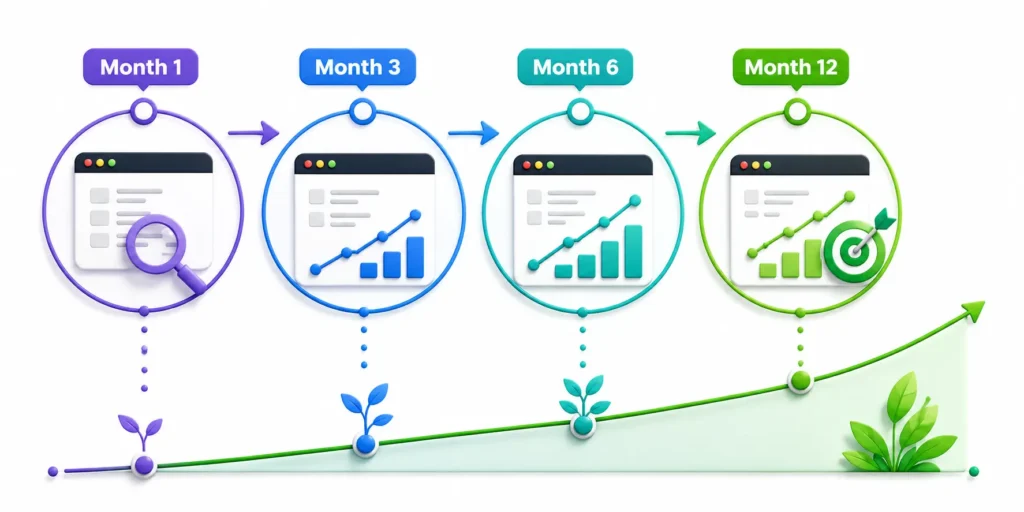
Perhaps the biggest misconception about SEO is expecting immediate results.
Many beginners publish a few articles, wait several weeks, and become discouraged when traffic doesn’t increase right away.
The truth is that SEO is a long-term investment.
What Actually Happens
Before your content can perform well in search results, it takes time for search systems to:
- Discover your page
- Understand your topic
- Evaluate quality signals
- Compare your content with competing pages
Even exceptional articles often need time to reach their full ranking potential.
A Personal Lesson
One of the biggest surprises I experienced while learning SEO was realizing how long quality content sometimes takes to gain traction.
Some of my earliest articles attracted very little traffic during their first few months.
However, after updating those articles, strengthening internal links, improving the overall user experience, and continuing to publish consistently, several of them eventually became reliable sources of organic traffic.
That experience taught me one lesson I’ll never forget:
Consistency almost always outperforms impatience.
Recommended Approach
Instead of focusing on immediate results, focus on:
- Publishing consistently
- Updating older articles
- Building topical authority
- Improving user experience
- Creating genuinely valuable resources
Avoiding these common SEO mistakes while consistently improving your content can help your blog grow steadily over time.
Sustainable SEO growth rarely happens overnight.
The bloggers who achieve long-term success are usually the ones who continue learning and improving long after others have given up.
How to Avoid Common SEO Mistakes
Use this checklist before publishing every blog post:
✅ Research the right keyword.
✅ Understand search intent.
✅ Write a compelling headline.
✅ Publish comprehensive, reader-focused content.
✅ Add relevant internal links.
✅ Optimize every image.
✅ Write an engaging SEO title and meta description.
✅ Test your page on mobile devices.
✅ Review your content before publishing.
✅ Update older articles regularly.
Before You Publish: A Quick SEO Check

Before you click Publish, ask yourself:
- Does my article answer the reader’s question completely?
- Have I naturally included my target keyword?
- Is the headline clear and compelling?
- Have I added relevant internal links?
- Are all images optimized?
- Does the page load quickly on mobile devices?
- Have I written a strong SEO title and meta description?
If you can confidently answer “Yes” to each question, your article is in a much stronger position to perform well over time.
Recommended SEO Resources for Beginners
One of the best ways to monitor your website’s performance is by using Google Search Console.
It helps you monitor impressions, clicks, indexing status, keyword performance, and technical issues directly from Google.
I also recommend bookmarking these free resources:
These official resources provide trustworthy guidance and help you stay up to date with current SEO best practices.
Key Takeaways
Learning SEO isn’t about avoiding every mistake.
It’s about recognizing those mistakes, learning from them, and continuously improving your content.
By targeting the right keywords, understanding search intent, creating valuable content, and delivering an excellent user experience, you’ll build a stronger foundation for sustainable organic growth.
Remember:
Long-term SEO success comes from consistency—not shortcuts.
Final Thoughts
Every successful blogger makes mistakes.
What sets successful bloggers apart is their willingness to learn, adapt, and keep improving.
SEO isn’t about chasing algorithms.
It’s about creating content that genuinely helps people.
If you consistently publish valuable resources, understand your audience’s needs, and apply the best practices covered in this guide, you’ll be well positioned for long-term success.
Remember to:
- Research keywords carefully.
- Understand search intent.
- Create valuable content.
- Use internal links strategically.
- Optimize your images.
- Improve the mobile experience.
- Stay consistent.
Most importantly, be patient.
Meaningful SEO growth takes time, but consistent effort produces lasting results.
Ready to Improve Every Blog Post You Publish?
Next, read our complete guide:
How to Optimize a Blog Post for Search Engines
to learn practical on-page SEO techniques that can help increase your visibility in search results.
Frequently Asked Questions
What is the most common SEO mistake new bloggers make?
Skipping keyword research is one of the most common SEO mistakes. Without understanding what people are searching for, attracting consistent organic traffic becomes much more difficult.
How long does SEO take to work?
SEO timelines vary depending on your competition, content quality, website authority, and consistency. While some websites begin seeing measurable progress within a few months, meaningful long-term growth requires patience and continuous improvement.
Can a new blog rank in search results?
Absolutely.
New websites can rank successfully by targeting long-tail keywords, creating genuinely helpful content, and matching search intent.
Do I need expensive SEO tools to get started?
No.
Many bloggers begin with free tools such as Google Search Console and Google Analytics. As your website grows, you can decide whether premium SEO tools are worth the investment.
Should I focus on SEO or content first?
Start by creating genuinely helpful, high-quality content.
Then optimize that content using SEO best practices.
The strongest SEO results come from content that solves real problems and provides lasting value for readers.
Is SEO still important today?
Yes.
SEO remains one of the most effective ways to attract targeted, long-term traffic without relying entirely on paid advertising or social media.
As search technology continues to evolve, creating people-first content and delivering an outstanding user experience remain the foundation of sustainable SEO success.