
How to Start Affiliate Marketing in the USA for Beginners: Step-by-Step Guide

Introduction
If you’ve ever searched for ways to earn money online, chances are you’ve come across affiliate marketing.
And for good reason.
Unlike many online business models, you don’t need to create products, invest thousands of dollars upfront, manage inventory, or handle customer support. Instead, you earn commissions by recommending products and services that people already need.
That’s one reason many Americans are exploring this opportunity today.
Whether you’re a student, freelancer, stay-at-home parent, or someone looking to build an additional income stream, learning how to start affiliate marketing in the USA can open the door to long-term online earning potential.
That said, many newcomers enter the industry with unrealistic expectations. Some assume they’ll make money within a few days. Others join dozens of programs without a clear strategy.
The reality is simpler.
Success comes from choosing the right niche, creating valuable resources, building credibility, and consistently providing solutions to your readers’ problems.
If you’re completely new to online income opportunities, you may also enjoy reading Digi Earning Hub: A Beginner’s Guide to Earning Money Online in the USA, which covers several legitimate ways to make money online.
In this guide, you’ll learn exactly how to start affiliate marketing in the USA, even if you’re beginning from scratch.
What Is Affiliate Marketing?

At its core, affiliate marketing is a performance-based business model.
Companies reward individuals for referring customers through unique tracking links.
Here’s a simple example:
- You join a partner program.
- The company provides a unique referral link.
- You recommend a product or service.
- Someone clicks your link.
- They complete a purchase.
- You earn a commission.
It’s a straightforward system.
However, the people who generate sustainable income aren’t simply sharing links everywhere. They’re creating useful articles, tutorials, reviews, and resources that genuinely help readers make informed decisions.
If you’d like a deeper introduction to the concept itself, check out What Is Affiliate Marketing? A Beginner’s Guide for Americans.
Why So Many People in the USA Are Choosing This Business Model
Over the past several years, online entrepreneurship has become more accessible than ever.
Many people are drawn to affiliate marketing because it offers flexibility and scalability without requiring a large financial investment.
Let’s look at some of the biggest advantages.
Low Startup Costs
Many online businesses require inventory, equipment, or significant upfront investment.
With this model, you can often begin with a simple website and a willingness to learn.
Flexible Schedule
You can work around your current responsibilities.
Whether you have a full-time job, attend school, or manage a family, this business model allows you to build at your own pace.
No Product Creation
Creating products can be time-consuming and expensive.
Here, you’re promoting solutions that already exist.
Long-Term Growth Potential
A high-quality article can continue attracting organic visitors months or even years after publication.
This is especially true when the content remains accurate, updated, and relevant to user needs.
That’s one reason many website owners combine blogging with affiliate promotions.
Multiple Revenue Opportunities
Many successful website owners earn income through several channels at the same time, including:
- Affiliate commissions
- Display advertising
- Freelance services
- Digital products
- Sponsored partnerships
For example, many creators first learn How to Start a Blog in the USA: Step-by-Step Beginner’s Guide and later monetize that website through affiliate partnerships.
Is Affiliate Marketing Still Worth It in the USA?
This is one of the most common questions people ask.
The short answer is yes.
However, the opportunity today looks different than it did years ago.
Google increasingly rewards websites that demonstrate expertise, provide genuine value, and prioritize user experience.
That means publishing low-quality articles stuffed with keywords is no longer an effective strategy.
Instead, successful marketers focus on:
- Valuable information
- Authentic recommendations
- Real problem-solving
- Strong website experience
- Consistent publishing
In other words, the opportunity is still very real, but the standards are higher.
For people willing to create useful resources and stay consistent, the long-term potential remains significant.
Affiliate Marketing Industry Growth
The industry continues to expand as more consumers shop online and businesses invest in performance-based marketing.
Several factors continue driving growth:
- Increased e-commerce adoption
- Growing creator economy
- Expansion of SaaS companies
- More businesses launching partner programs
- Increased demand for product reviews and tutorials
Of course, this doesn’t guarantee success.
But it does demonstrate that affiliate marketing remains a legitimate and growing online business model.
Step 1: Choose a Profitable Niche

One of the most important decisions you’ll make is selecting your niche.
A niche is simply the specific topic your website or platform focuses on.
Many first-time marketers make the mistake of choosing a niche solely because someone claims it’s profitable.
That’s usually a mistake.
The best niche sits at the intersection of:
- Personal interest
- Audience demand
- Monetization opportunities
- Long-term sustainability
If one of these factors is missing, growth becomes much more difficult.
Popular Niches for New Affiliate Marketers
Personal Finance
Topics such as budgeting, investing, savings accounts, and financial tools continue attracting strong interest.
Online Business
This category includes blogging, freelancing, SEO, digital marketing, and entrepreneurship.
Because your website already focuses on these subjects, this niche is highly relevant.
Technology
Software, AI tools, productivity applications, and business platforms remain popular with online audiences.
Education
Online learning, certifications, and professional development programs continue expanding every year.
Health and Wellness
Consumers consistently search for information related to fitness, nutrition, and healthy living.
How to Choose the Right Niche
Ask yourself a few simple questions:
- Can I create valuable content about this topic for the next year?
- Are people actively searching for information in this area?
- Are there quality products or services I would feel comfortable recommending?
- Can I genuinely provide solutions to readers’ problems?
If you’re still exploring ideas, take a look at Best Blogging Niches for Beginners in the USA: 10 Profitable Blog Ideas.
That article can help you identify opportunities that align with both your interests and business goals.
Step 2: Build Your Platform
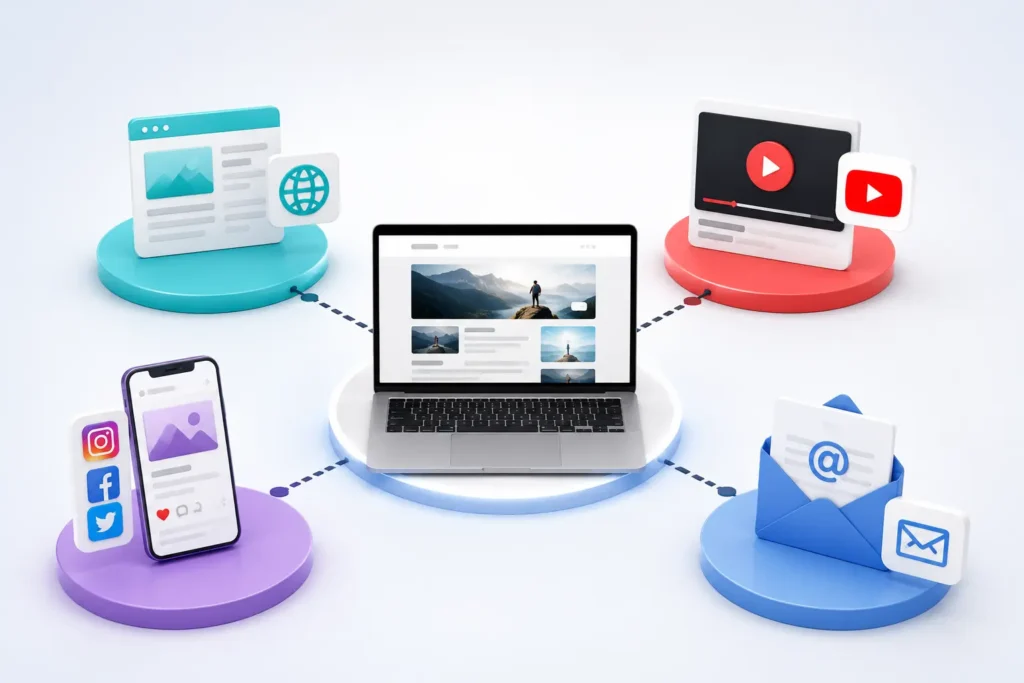
Before you can earn commissions, you need a place where people can discover your recommendations.
Several options exist, but some are more effective than others.
Blogging
For most people learning how to start affiliate marketing in the USA, blogging remains one of the strongest long-term strategies.
A blog allows you to:
- Rank in Google
- Build authority
- Publish tutorials
- Create reviews
- Generate recurring traffic
Unlike social media posts that disappear quickly, blog articles can continue attracting readers for years.
If you haven’t created a website yet, start with How to Start a Blog in the USA: Step-by-Step Beginner’s Guide.
YouTube
Video content can build strong audience relationships and demonstrate products visually.
Social Media
Platforms such as Instagram, TikTok, Pinterest, Facebook, and X can help grow brand awareness and attract new visitors.
Email Marketing
Building an email list allows you to communicate directly with your audience and reduce dependence on search engine algorithms.
Which Platform Is Best for Beginners?
Here’s a simple comparison:
| Platform | Startup Cost | Difficulty | Long-Term Potential |
|---|---|---|---|
| Blogging | Low | Medium | High |
| YouTube | Low | Medium | High |
| Social Media | Low | Low | Medium |
| Email Marketing | Low | Medium | High |
For most people, blogging provides the strongest foundation because it supports SEO, long-form content, and long-term audience growth.
Step 3: Join Relevant Affiliate Programs
Once your platform is ready, it’s time to find products and services that align with your readers.
The goal isn’t to promote everything available.
Instead, focus on solutions that genuinely benefit the people you’re trying to serve.
Look for programs that offer:
- Reliable tracking
- Competitive commissions
- High-quality products
- Good customer support
- Positive reputation
Best Affiliate Programs for Beginners in the USA
If you’re new to affiliate marketing, choosing the right program can make the learning process much easier.
Rather than signing up for dozens of affiliate programs, start with a few trusted platforms that offer reliable tracking, quality products, and strong reputations.
Some beginner-friendly options include:
- Amazon Associates
- Fiverr Affiliates
- Hostinger Affiliate Program
- ShareASale
- CJ Affiliate
- Impact
- PartnerStack
Each platform serves a different audience and niche. For example, Amazon Associates is popular among product-focused websites, while Fiverr Affiliates can be a great fit for content related to freelancing, digital services, and online business.
The most successful affiliate marketers understand that credibility is more valuable than any commission rate.
Promoting products simply because they pay well can damage reader trust and limit long-term growth.
That’s why the smartest approach is to recommend solutions that genuinely help your audience and align with their needs.
Step 4: Create Valuable Content That People Actually Want to Read
One of the biggest reasons new affiliate websites fail is simple:
They focus on promotions instead of educating their readers.
Readers don’t visit websites because they want affiliate links.
They visit because they need answers, solutions, recommendations, or guidance.
When your articles provide practical solutions for visitors, product recommendations feel natural rather than sales-focused.
That’s exactly how sustainable online businesses are built.
Types of Articles That Generate the Best Results
Not every article serves the same purpose.
Some attract readers who are researching.
Others attract readers who are ready to make a purchase.
A healthy website usually includes both.
Product Reviews
Review articles help people evaluate a product before spending money.
Readers often search for reviews when they’re close to making a decision.
Examples include:
- Website hosting reviews
- SEO software reviews
- Email marketing platform reviews
- AI tool reviews
The key is honesty.
Discuss benefits, limitations, pricing, and real-world use cases.
Balanced reviews build far more credibility than overly promotional ones.
Comparison Articles
Comparison content often performs exceptionally well because readers are actively evaluating alternatives.
Examples:
- Tool A vs Tool B
- Platform A vs Platform B
- Service A vs Service B
You already have an excellent example in Fiverr vs Upwork: Which Freelance Platform Is Best for Beginners?
This type of article naturally attracts visitors who are close to making a decision.
Step-by-Step Tutorials
Tutorials remain one of the most powerful forms of online content.
Why?
Because people are constantly searching for guidance.
Examples include:
- How to create a blog
- How to optimize a website
- How to build an email list
- How to start freelancing
Your readers can also benefit from How to Create a Fiverr Gig for Beginners in 2026 and How to Create an Upwork Profile That Wins Clients.
These educational resources help establish expertise while creating opportunities to recommend relevant tools.
Resource Pages
Resource pages collect useful recommendations in one place.
For example:
- Essential Blogging Tools
- Recommended SEO Software
- Best Affiliate Marketing Resources
- Useful Productivity Tools
These pages often become some of the highest-converting assets on successful websites.
Step 5: Bring the Right People to Your Website

Creating valuable articles is only half of the equation.
People need to discover your work.
That’s where traffic generation becomes important.
Rather than chasing every marketing tactic available, focus on a few channels and master them.
Search Engine Optimization (SEO)
SEO remains one of the most reliable long-term traffic sources available.
When someone searches Google for information related to your niche, well-optimized pages can appear in the search results and attract targeted visitors.
The best part?
Unlike paid advertising, organic traffic can continue arriving long after an article is published.
Focus on:
- Understanding search intent
- Creating valuable content
- Optimizing on-page SEO
- Building internal links
- Improving website speed
- Creating a positive user experience
SEO takes patience, but the long-term benefits can be substantial.
Use Internal Linking Strategically
Internal links serve two important purposes.
First, they help readers discover additional relevant resources.
Second, they help search engines understand how your content is connected.
For example, this guide naturally connects with:
A strong internal linking structure helps build topical authority over time.
Social Media Can Accelerate Growth
Although SEO is powerful, social media can help you reach people faster.
Platforms such as:
- TikTok
- X
can introduce your content to entirely new audiences.
The most effective approach is to educate, inspire, and engage rather than constantly promoting products.
People respond better to value than sales pitches.
Build an Email List Early
Many experienced affiliate marketers wish they had started building an email list sooner.
Why?
Because search engine rankings and social media algorithms can change.
Your email list belongs to you.
Benefits include:
- Direct communication
- Higher engagement
- Better conversion rates
- Long-term audience ownership
Even a small list can become a valuable business asset over time.
Step 6: Focus on Credibility Before Commissions

Many newcomers make the mistake of prioritizing earnings over reader needs.
Ironically, that usually reduces earnings.
The websites that perform best over the long run focus on credibility first.
When people believe your recommendations are genuine, they’re much more likely to follow them.
A Lesson I Learned Early in Affiliate Marketing
When I first got interested in affiliate marketing, I made a common beginner mistake—I signed up for too many affiliate programs without a clear plan.
At the time, I was more focused on earning commissions than understanding what my audience actually needed.
As I gained experience, I realized that long-term success isn’t built on promoting the highest-paying offers. It’s built on trust.
Once I shifted my focus toward creating genuinely helpful content and recommending products that were truly relevant to my readers, everything started to improve.
My content became more valuable, engagement increased, and the results followed naturally.
That experience taught me an important lesson: helping people solve real problems will always be more effective than chasing quick commissions.
Best Practices for Building Authority
Be Transparent
Honest recommendations create stronger relationships than exaggerated claims.
If a product has limitations, mention them.
Readers appreciate balanced opinions.
Recommend Relevant Solutions
Not every product is suitable for every audience.
Focus on solutions that directly address the challenges your readers face.
Relevance often matters more than commission percentages.
Share Personal Insights When Possible
Whenever you have direct experience with a product or service, include it.
Real-world observations make your recommendations more convincing and more helpful.
Use Affiliate Disclosures
Transparency is essential.
A simple disclosure informs readers that you may earn a commission if they purchase through your referral links.
This builds reader trust while maintaining compliance with advertising guidelines.
Example:
“This article contains affiliate links. If you purchase through these links, I may earn a commission at no extra cost to you.”
Step 7: Monitor Performance and Improve Over Time
Successful affiliate websites are rarely built overnight.
Growth comes from continuous improvement.
Pay attention to:
- Search rankings
- Page performance
- Click-through rates
- Conversion rates
- Reader engagement
- Revenue trends
Data helps you understand what resonates with your audience.
Small improvements made consistently often produce significant results over time.
Common Mistakes New Affiliate Marketers Should Avoid
Learning from other people’s mistakes can save months of frustration.
Here are some of the most common challenges.
Choosing a Niche Solely for Profit
A niche may look profitable on paper.
But if you have no interest in the topic, creating helpful articles becomes difficult.
Long-term consistency matters.
Choose a subject you can discuss enthusiastically for years, not weeks.
Expecting Immediate Results
Many people underestimate how long online growth can take.
Building authority, attracting readers, and earning commissions requires patience.
Those who remain committed usually outperform those looking for shortcuts.
Publishing Thin Articles
Google increasingly rewards pages that provide comprehensive, useful information.
A handful of high-quality articles is often more valuable than dozens of weak ones.
Focus on depth, clarity, and usefulness.
Ignoring SEO Fundamentals
SEO remains one of the most valuable skills an online entrepreneur can learn.
In fact, it’s one of the topics discussed in Best Digital Skills to Learn in 2026 for Beginners in the USA.
Understanding SEO can help your content reach significantly more people.
Recommending Too Many Products
Too many recommendations can overwhelm readers.
Instead of promoting everything, focus on a smaller selection of trusted solutions.
This approach often improves both credibility and conversion rates.
How Much Can You Earn?
This question comes up frequently.
The honest answer is:
It depends.
Income varies based on several factors, including:
- Niche selection
- Website authority
- Organic traffic
- Audience engagement
- Product relevance
- Publishing consistency
Some people earn their first commission within a few weeks.
Others need several months before seeing meaningful results.
A more realistic mindset is to focus on building assets rather than chasing immediate earnings.
When you regularly publish valuable articles, traffic and revenue often follow.
Many website owners who begin with How to Make Money Blogging in the USA for Beginners: A Step-by-Step Guide eventually discover that affiliate partnerships become one of their most reliable revenue sources.
Frequently Asked Questions
Is Affiliate Marketing Legal in the USA?
Yes. It is a legitimate business model used by thousands of companies and creators across the country.
Do I Need a Website?
No.
However, having your own website provides greater control, stronger SEO opportunities, and better long-term growth potential.
Can Someone With No Experience Succeed?
Absolutely.
Every successful marketer started as a beginner.
The difference is consistency, learning, and willingness to improve.
How Long Does It Take to Earn the First Commission?
There is no universal timeline.
Results depend on your niche, strategy, effort, and audience growth.
Is This a Passive Income Business?
Eventually, it can generate passive income.
However, significant upfront work is usually required before passive results become possible.
Final Thoughts
Learning how to start affiliate marketing in the USA is not about finding shortcuts.
It’s about building a valuable online asset that helps real people solve real problems.
The people who succeed are rarely the ones searching for overnight success.
They’re the ones who consistently publish valuable resources, improve their skills, build authority, and focus on serving their readers.
If you’re willing to stay patient and keep learning, this business model can become an excellent long-term income opportunity.
For your next steps, continue exploring:
Start small, stay consistent, and focus on helping people.
The results often take longer than expected—but they can also last much longer than most people imagine.